Anzeige
Meldung des Tages: Milliarden aus Washington? Dieser kritische Rohstoff könnte der nächste Profiteur sein
Neuester, zuletzt geles. Beitrag
Antworten | Börsen-Forum
Übersicht ZurückZurück WeiterWeiter
... 1438  1439  1441  1442  ...

Der USA Bären-Thread


Beiträge: 156.453
Zugriffe: 26.487.641 / Heute: 557
S&P 500 6.918,46 -0,83% Perf. seit Threadbeginn:   +374,20%
 
C_Profit:

Japan's jobless hit the streets

8
04.01.09 22:24

Auch die Japaner entdecken das Zelten...

7:30AM Monday Jan 05, 2009

TOKYO - A tent village set up in a Tokyo park for the country's growing number of jobless filled up so fast that it was moved to a government building to accommodate the overflow.


The Government offered a ministry hall, responding to a request from volunteers, to house more than 250 unemployed and homeless people after the first comers quickly filled the tents, according to the shelter's Japanese-language website.

The homeless can stay in the building until tomorrow, and job counselling and other efforts were under way to place the people in other locations, it said.

The tent village that volunteers and unions opened on New Year's Eve highlights the serious social costs of the global recession for the world's second largest economy.

The Government estimates 85,000 part-time workers will lose their jobs between October and March. Another 3300 permanent employees are expected to become jobless over the same period.

Temporary workers have been the first to be fired in the latest wave of cutbacks as Japan's exports and company investments crashed after the US financial crisis.

Japanese Communist Party executive committee chairman Kazuo Shii, who visited the village, said the Government needed to do more to help the unemployed.

"It is unforgivable that Japan's major companies have thrown so many workers out on the streets at the end of the year," he said.

For decades Japan promised lifetime employment at big companies.

- AP

You only learn who has been swimming naked when the tide goes out -    W.Buffett
Antworten
Reinyboy:

Staatsbankrott - so fällt ein Index

3
04.01.09 23:19

 wenn´s rund geht. 

Die Island- Blase entlüftet,hehehehehehe..... 

Der USA Bären-Thread 5256188charts.quote.com/cis/...names=true&showdatainheader=false" style="max-width:560px" />

Je genauer du planst, umso härter trifft dich der Zufall
Antworten
steinklopfer:

US Bond wie shorten

4
04.01.09 23:27
Danke für die antwort wawidu!

hier mein ergebnis, leider ko zerti, mag ja os lieber...

zertifikate.onvista.de/...MENT=21829959&MONTHS=6&CHART=1#chart

das ersetzt natürlich nicht die kompetente beratung bei einem anlagebrater (madoff, ackermann, kerviel usw, usw)
good trades euch allen!!
der steinklopfer
Antworten
metropolis:

Frisch und erholt ins neue Jahr

5
05.01.09 12:05
und schon Bock auf Traden ;-) Interessant sind aus meiner Sicht Gold und Bund (danke für die Infos hier). Bei Aktien sollte man draussen bleiben und eine gute Shortmöglichkeit abwarten. Kann sein, dass das noch 1-2 Monate dauert, Geduld wird sich hier aber auszahlen.

Was den Bärenthread betrifft, lese ich den mittlwerweile wieder gerne. Mit Verlaub, aber die Rally hat der Stimmung hier gut getan, da die Euphorie und Arroganz damit raus ist. Auch bei mir machte sich ja zuletzt Ernüchterung breit, da die erwartete technische Korrektur nach oben ausblieb (bzw. jetzt erst nachgeholt wird, 1974 läßt grüßen). Folgerung: Man sollte stets im Haupttrend spekulieren, zur Zeit gibt es ja genug andere Spielplätze (s.o.)

Alles im allem also ein positiver Start ins neue Jahr, das mit Sicherheit Super Gewinnchancen bieten wird. Es wird auch nicht das letzte dieses Threads werden...
Antworten
obgicou:

Short bei 5000

4
05.01.09 12:41
aufgestockt
Antworten
Kicky:

USA können nicht länger auf Pump leben

8
05.01.09 13:25
meint Willemn Buiter in der Financial Times und prophezeit,dass die anderen Länder bald nicht mehr die Bonds kaufen werden,weil USA zu stark verschuldet sind und keine Sicherheit mehr bieten...The past eight years of imperial overstretch, hubris and domestic and international abuse of power on the part of the Bush administration has left the US materially weakened financially, economically, politically and morally.  Even the most hard-nosed, Guantanamo-bay-indifferent potential foreign investor in the US must recognise that its financial system has collapsed.  Key wholesale markets are frozen; the internationally active part of its financial system has either been nationalised or underwritten and guaranteed by the Federal government in other ways. Most market-mediated financial intermediation has ground to a halt, and the Fed is desperately trying to replace private markets and financial institutions to intermediate between households and non-financial operations.  The problem is not confined to commercial banks, investment banks and universal banks.  It extends to insurance companies (AIG), Quangos (a British term meaning Quasi-Autonomous Government Organisations) like Fannie Mae and Freddie Mac, amorphous entities like GEC and GMac and many others.
The legal framework for the regulation of financial markets and institutions is a complete shambles.  Even given the dismal state of the legal framework, the actual performance of key regulators like the Fed and the SEC has been appalling, with astonishing examples of incompetence and regulatory capture.

There is no chance that a nation as reputationally scarred and maimed as the US is today could extract any true “alpha” from foreign investors for the next 25 years or so. So the US will have to start to pay a normal market price for the net resources it borrows from abroad. It will therefore have to start to generate primary surpluses, on average, for the indefinite future.  A nation with credibility as regards its commitment to meeting its obligations could afford to delay the onset of the period of pain.  It could borrow more from abroad today, because foreign creditors and investors are confident that, in due course, the country would be willing and able to generate the (correspondingly larger) future primary external surpluses required to service its external obligations.  I don’t believe the US has either the external credibility or the goodwill capital any longer to ask, Oliver Twist-like, for a little more leeway, a little more latitude.  I believe that markets - both the private players and the large public players managing the foreign exchange reserves of the PRC, Hong Kong, Taiwan, Singapore, the Gulf states, Japan and other nations - will make this clear.
There will, before long (my best guess is between two and five years from now) be a global dumping of US dollar assets, including US government assets. Old habits die hard. The US dollar and US Treasury bills and bonds are still viewed as a safe haven by many.  But learning takes place. The notion that the US Federal government will be able to generate the primary surpluses required to service its debt without selling much of it to the Fed on a permanent basis, or that the nation as a whole will be able to generate the primary surpluses to service the negative net foreign investment position without the benefit of “dark matter” or “American alpha” is not credible.

So two things will have to happen, on average and for the indefinite future, going forward. First, there will have to be some combination of higher taxes as a share of GDP or lower non-interest public spending as a share of GDP.  Second, there will have to be a large increase in national saving relative to domestic capital formation........

The US Federal government has taken on massive additional contingent liabilities through its bail out/underwriting of the US financial system (and possibly other bits of the US economic system that are too politically connected to fail).  Together will the foreseeable increase in actual Federal government liabilities because of vastly increased future Federal deficits, this implies the need for a future private to public sector resource transfer that is most unlikely to be politically feasible without recourse to inflation.  The only alternative is default on the Federal debt.  There is little doubt, in my view, that the Federal authorities will choose the inflation and currency depreciation route over the default route.
If I can figure this out, so can anyone in the US or abroad who follows recent economic developments.  The dawning of the realisation will lead to the dumping of the assets.

....
The latest gurgling about the magnitude of the Obama fiscal stimulus are certainly impressive: $775bn or so (around 5 per cent of GDP) over two years.  This on top of a Federal deficit that even absent these stimuli could easily top $750bn.  I now anticipate a Federal deficit of between $1.5 trillion and $2.0 trillion for 2009 and something slightly lower for 2010.  With both the Fed and the Treasury exposed to trillions of private assets and institutions of doubtful quality and solvency, the stock of US Federal debt could easily increase by many more trillions of US dollars during the next couple of years.....

...Both rational drivers of a low US saving rate are gone.  The US housing market and global stock markets have imploded. It will take years, even decades, to restore household financial wealth-income ratios to levels that don’t guarantee retirement in poverty for much of the US population.  The rest of the world will also no longer lend to the US at a negative nominal (and real) interest rate, as it has done for years.

.........geht hier weiter:blogs.ft.com/maverecon/2009/01/...afford-a-keynesian-stimulus/
Antworten
Reinyboy:

@obgicou

4
05.01.09 13:29

Wer da nicht shortet ist selber Schuld, hehehehe.....


Je genauer du planst, umso härter trifft dich der Zufall
Antworten
Ischariot MD:

Jaja, bis dann die Amis

2
05.01.09 14:45
wieder grüne Kerzen und ein Gap-up generieren ...
Antworten
Ischariot MD:

neue / alte Unbill für Banken

7
05.01.09 14:47
ist schon erstaunlich, die ganze Welt scheint voll mit kommunalen Profi-Kämmerern, die das Wort "Risiko" angeblich noch nie gehört haben ... jetzt auch in bella Italia

Banken droht in Italien Skandal um Kommunalfinanzierung - Presse

  LONDON (Dow Jones)--Geschäfte von Investmentbanken mit italienischen Kommunen und Regionalregierungen könnten sich nach einem Bericht der britischen Zeitung "Daily Telegraph" zum größten Finanzskandal in Italien seit dem Fall Parmalat entwickeln. So soll eine Gruppe von Banken, darunter die Deutsche Bank und die Hypo-Real-Estate-Tochter Depfa, die Gebietskörperschaften dazu verleitet haben, zur Tilgung von Anleihen zurückgelegte Gelder in riskante Investments zu stecken.

  Schätzungen zufolge geht es um mögliche Verluste im Volumen von 35 Mrd EUR, berichtet das Blatt am Montag. Als ein Beispiel wird auf die Stadt Mailand verwiesen, deren Tilgungsfonds von den Banken verwaltet wurde. Die norditalienische Metropole behalte sich wegen der Verluste, die im Zusammenhang mit Zinsswaps entstanden sind, rechtliche Schritte gegen die Finanzinstitute vor, wie Bürgermeisterin Letizia Moratti dem "Daily Telegraph" sagte.

  Wie Mailand geht es vielen Kommunen und Regionalregierungen in Italien, die in den 1990er Jahren Kredite aufgenommen, auf Anraten der Zentralregierung in Rom aber Tilgungsfonds eingerichtet hatten, um die jeweils volle Summe bei Fälligkeit abzahlen zu können. Investmentbanken boten sich daraufhin an, diese Tilgungsfonds zu managen. Was den italienischen Gebietskörperschaften dabei aber offenbar nicht klar gewesen ist, war die Tatsache, dass die in den Fonds eingezahlten Mittel einem Verlustrisiko ausgesetzt waren.

  Außer den genannten Banken waren laut der Zeitung auch JP Morgan Chase, UBS, Barclays, Merrill Lynch,verschiedene italienischen Banken sowie die japanische Nomura an den Transaktionen beteiligt. Deutsche Bank und Hypo Real Estate wollten sich zu dem Bericht auf Anfrage am Montag nicht äußern.
www.finanzen.net/nachricht/...munalfinanzierung__Presse_828454
Antworten
Contrade 121:

Einfach erklärt: Papiergeldkönige

 
05.01.09 14:49
null
Antworten
Malko07:

In Misskredit

11
05.01.09 17:04

Kleine Amerikakunde (1)

In Misskredit

von Sabine Muscat


Obama kommt - und Amerika ist wieder angesagt. Damit wir uns in dem Land, das uns in acht Bush-Jahren fremd geworden ist, wieder zurechtfinden, bringt uns die FTD-Washington-Korrespondentin bis zum 20. Januar den US-Alltag wieder nahe. Heute: Das Leben mit Schulden.

Ich lebe schuldenfrei, und bisher ging es mir gut damit. Doch in Amerika habe ich mit diesem Lebenswandel ein Problem. Einer wie mir traut man hier nicht über den Weg. Einen Kredit für ein Haus oder ein Auto würde ich niemals bekommen. Wer keine Schulden hat, kann nicht beweisen, dass er sie zurückzahlen könnte, wenn er welche hätte. Er verstößt gegen das oberste Gebot der Konsumgesellschaft: Du sollst dich verschulden!

Und so führe ich ein Leben im Schatten. "Sie müssen eine Kreditgeschichte aufbauen", sagte die Bankberaterin. Denn ohne Kreditgeschichte bekommt man keinen Kredit. Wie also komme ich an Schulden? Mein Kaufhaus wusste die Antwort. Wenn ich dort mit einer Kundenkreditkarte zahle, bekomme ich sogar einen Rabatt auf die eingekaufte Ware. Ich kaufte zwei Bettlaken und hatte endlich Schulden. Wie ein echter Amerikaner.

Das Kaufhaus schickte nie eine Rechnung für meine Kundenkartenzahlung. Als ich nachfragte, erfuhr ich, dass schon längst Überziehungszinsen angefallen seien. Ich fragte eine Verkäuferin um Rat: "Um Himmels willen, ich benutze diese Karte nie!", schrie sie. "Begleichen Sie hier und jetzt Ihre Schulden samt Zinsen. Die steigen sonst immer weiter und Sie können nichts tun."

Ich befolgte ihren Rat und fügte hinzu, dass ich mein Kaufhaus-Konto bei dieser Gelegenheit gerne wieder schließen würde. "Schließen Sie das Konto nicht!", rief die Verkäuferin mit Panik in der Stimme. Wer eine Kreditkarte schließen lässt, erregt einen schlimmen Verdacht: Dass er sich die Karte nicht mehr leisten kann.

Ich wundere mich nicht mehr über die Kreditkrise in den USA, sagte ich empört. Ich könne nun verstehen, wie Menschen an Hauskredite geraten seien, deren Bedingungen sie nicht verstehen. Das sei doch nicht gerecht. Die Verkäuferin blickte mir fest in die Augen: "Wenn ein Angebot zu gut klingt, um wahr zu sein, dann ist es wahrscheinlich zu gut, um wahr zu sein. Schon mein Vater hat immer gesagt: Das Leben ist nicht gerecht."

www.ftd.de/politik/international/...kunde-1-In-Misskredit/456788.html

Antworten
C_Profit:

"Wir erleben gerade,

6
05.01.09 17:11

wie die Wirtschaftslage abschmiert: Je schlechter es uns heute geht, desto wahrscheinlicher ist es, dass es nicht noch schlechter kommt"

                                                                                                  Commerzbank-Chefvolkswirt Jörg Krämer

ist schon Karneval ? Der USA Bären-Thread 5259610

Börsianer: Konjunkturtalfahrt endet im ersten Halbjahr

Berlin (Reuters) - Lichtblick für den rezessionsgeplagten Euro-Raum: Der per Umfrage unter gut 700 professionellen Börsenanlegern ermittelte Sentix-Konjunkturindex stieg im Januar erstmals seit einem halben Jahr.Die privaten und institutionellen Anleger hoben ihre Konjunkturerwartungen dabei so stark an wie seit rund dreieinhalb Jahren nicht mehr, wie die Investmentberatung Sentix am Montag mitteilte. Auch die Lage wurde besser bewertet als im Dezember. Dies deute "eine mögliche Trendwende zur zweiten Jahreshälfte 2009 an", sagte Sentix-Geschäftsführer Patrick Hussy zu Reuters.de.reuters.com/article/economicsNews/idDEBEE5040AY20090105


Bei Herrn Sinn liest sich das etwas anders:

«Die deutsche Wirtschaft steht vor der schwersten Rezession der Nachkriegsgeschichte. Auch für das Jahr 2010 sehen wir noch keinen Aufschwung.»

newsticker.sueddeutsche.de/list/id/368509


You only learn who has been swimming naked when the tide goes out -    W.Buffett
Antworten
Malko07:

#35987: Manchen Menschen

9
05.01.09 17:36
fehlt es an Fantasie.

Wenn wir ein neues Nachkriegstief in der weltweiten wirtschaftlichen Entwicklung erleben, muss das der Boden sein! So funktionieren eben Charts! Man könnte natürlich auch zum Ergebnis kommen, dass es für so eine starke Krise mindestens etwas länger als Mitte des Jahres abwärts gehen wird. Aber derartige Gedankengänge sind verpönt. Wenn man heute Aktien kauft, muss es Mitte des Jahres aufwärts gehen. Es war doch schon immer so, oder ... 6 Monatsregel ....?

Umso heftiger wird das Erschrecken sein. Wir brauchen eben große bullische Gefühle. Ansonsten kommen wir nie richtig nach Süden.

Trotzdem würde ich keinem empfehlen in den Tunnel zu laufen, nur weil er am Ende ein Licht sieht. Es wird die nächsten Monate unter Garantie die Lok sein, die von der Reparatur zurück kehrt.  Das letzte Mal, als Ackermann Lichter sah, waren 2 unterwegs gewesen.

Diejenigen, die Angst haben was zu verpassen, sollten allerdings schnellstens auf Einkaufstour gehen.  Nachden die Notenbanken mit ihrem Latein am Ende sind, werden es die Konjunkturprogramme der Regierungen unter Garantie packen. Wenn soviel Geld verbrannt wird, werden die Herzen der Götter erwärmt und wir sind draußen. Alles wird gut!

;o)
Antworten
C_Profit:

Negertiefe Berichterstattung

3
05.01.09 17:59

schadet dem möglichen Aufschwung.

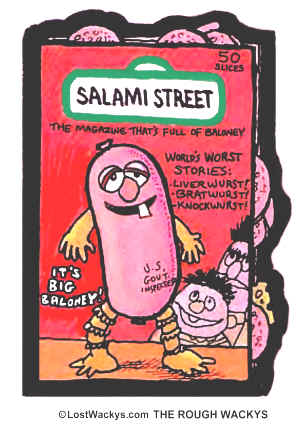
Außerdem muss die Salami noch eine ganze Weile reichen...Der USA Bären-Thread 5259974

You only learn who has been swimming naked when the tide goes out -    W.Buffett
Antworten
jungchen:

Daimler faengt an

7
05.01.09 18:14
Daimler U.S. December sales fall 23.5%
By Wallace Witkowski
Last update: 12:06 p.m. EST Jan. 5, 2009
SAN FRANCISCO (MarketWatch) -- Daimler AG said Monday that U.S. December sales fell 23.5% to 20,848 vehicles on poor Mercedes-Benz sales. Mercedes U.S. December sales dropped 32.1% to 18,507 vehicles. The company also sold 2,341 Smart cars in December in the United States. U.S. Smart sales began in January 2008.
Ich brauche einen Balkon - damit ich zum Volk sprechen kann.
Antworten
Kicky:

Vorsicht Commodity Index neu gewichtet

7
05.01.09 18:17
The major commodity indices rebalance their respective asset weightings once a year (or occasionally more) — and with that comes a mass dose of buying and selling. The 2009 rebalancing is expected to start sometime this week.

Luckily, JP Morgan has produced its best guess of how the 2009 reweightings of the DJ AIGCI and the S&P GSCI indices will impact the market.

The weightings for both indices are released ahead of time, but begin to kick in the first few working days of the new year. In the case of the DJ-AIGCI — which JP Morgan estimates has $25bn in funds tracking it — the new weightings come into force during the roll period that begins January 9th. The S&P GSCI index weightings kick-in after its January roll which commences January 8th. JP Morgan estimates about $50 bn of investment into that index.
As the DJ weighting multipliers account for changes in US dollar-denominated values there is generally more potential for large changes there than in the GSCI, whose weightings are set in terms of ounces/tonnes (on the basis of liquidity and are weighted by their respective world production quantities).

Accordingly, JP Morgan see the most significant change coming in the DJ-AIGCI rebalance. Here the market weight of crude oil is expected to increase from 9.6 per cent to 13.8 per cent, gold from 10.8 per cent to 7.9 per cent, copper (COMEX) from 4.5 per cent to 7.3 per cent, live cattle from 6.4 per cent to 4.3 per cent and sugar from 4.7 per cent to 3.0 per cent. Meanwhile, S&P GSCI crude oil weight will go from 32 per cent to 33.8 per cent. Their analysis:

In financial terms, we expect the rebalancing to have the greatest impact in gold, COMEX copper, crude oil, gold, and live cattle. We estimate that the rebalancing of the two indices is expected to result in $877 million of selling in gold, $699 million of buying in COMEX copper, $528 million of selling in live cattle, and $523 million of buying in crude oil.
(Verkleinert auf 61%) vergrößern
Der USA Bären-Thread 208591
Antworten
Kicky:

And here are the new weightings

2
05.01.09 18:18
Der USA Bären-Thread 208592
Antworten
Kicky:

o.T.

2
05.01.09 18:24
Der USA Bären-Thread 208593
Antworten
metropolis:

Gesoffen wird immer!

5
05.01.09 18:33
FAVORIT DES TAGES
Bier gegen die Krise
[15:00, 05.01.09]

Von Erich Gerbl


Südamerikas größter Getränkehersteller AmBev macht auch in schwierigen Zeiten gute Geschäfte. Mit dem wachsenden Wohlstand in Südamerika erhöht sich trotz der Finanzmarktkrise der Bierkonsum. Höhere Preise werden durchgesetzt.

Quelle: BO
Antworten
Kicky:

Credit Crunch im alten Rom und 1294

6
05.01.09 18:45
rustle.blogsome.com/2008/11/18/credit-crunch-in-ancient-rome-3/

..................However, creditors demanded payment in full, and debtors were morally bound to respond. The first results were importunate appeals to money-lenders. Next, the praetors’s court resounded with activity. The decree requiring land purchase and sales, envisaged as relief, had the opposite effect since when the capitalists received payment they hoarded it, to buy land at their convenience. These extensive transactions reduced prices. but large-scale debtors found it difficult to sell; so many of them were ejected from their properties, and lost not only their estates but their rank and reputation.

Then Tiberius came to the rescue. He distributed a hundred million sesterces among specially established banks, for interest-free three year state loans, against security of double the value in landed property. Credit was thus restored; and gradually private lenders, too, reappeared. However, land transactions failed to adhere to the provisions of the senatorial decree. As usual, the beginning was strict, the sequel slack.

und im 13.Jahrhundert eine ähnlicher Credit Crunch: Dr Adrian Bell, Senior Lecturer in the History of Finance at the ICMA Centre at the University of Reading, said:” It is widely believed that the current credit squeeze, leading to bank failures, is a modern phenomenon arising from the interplay of a historically unique set of circumstances that could not have been foreseen. However, events 700 years ago, starting in 1294, sound very much like today’s headlines. They included a sub-prime borrower, liquidity disappearing, recriminations, the seizure of foreign owned assets and runs on the bank.”

In the 1280s, the Italian merchant societies, the forerunners of today’s investment banks, were awash with money as they managed large sums of collected taxes for the Pope and the English king, as well as holding deposits from wealthy individuals. However, in the early 1290s, the Pope called in much of his money and the French king levied a huge tax on the Italian merchants in France. The final straw was the unexpected outbreak of war between England and France in 1294. Edward I, the then king of England, called on his bankers to raise the money needed to fund his armies. Unfortunately for the bank (the Ricciardi), their assets were tied up in loans and trade.

In normal times, the Ricciardi would have sought to raise short-term loans from their fellow merchants, but in 1294, like today, the interbank markets were frozen. The resultant uncertainty, combined with the fear that Edward (the medieval equivalent of a sub-prime borrower) would default on his debts, meant that the merchant societies were unwilling to lend to each other.

The bankers’ own comments are strikingly similar to those heard today: in 1294, the Ricciardi said that ‘it seems that money has disappeared’; ‘everyone to whom we owed money ran to us and wanted to be paid’; ‘where we used to have credit and could borrow 100,000 and 200,000 livres tournois (£25,000-50,000) and even more, we are now reduced to such a point that if we wanted 100 livres tournois (£25) we could not find them.’

As a result, the Ricciardi were unable to provide Edward with the funds he needed and his response was to seize all their assets in England, effectively bankrupting the society. The Frescobaldi of Florence, Edward I’s next bankers, also came to regret taking him on as a client, claiming that their existing customers had lost confidence in them as a direct result of their relationship with him. Customers withdrew their cash deposits, perhaps fearing that their entanglement with Edward had put their savings at risk, precipitating a run on the bank. Edward, like the current British Government, recognised the gravity of the situation and promised them £10,000 in compensation to keep them solvent.

This though, undoubtedly the best part:

Dr Bell continued: “It should be noted that the medieval economy was much less dependent on credit and banking than our modern economy. However, had Edward I faced today’s crisis, initially, he would probably have placed senior executives under house arrest, most likely without trial, until the Government could recover as much as possible from their assets and estates. However, in his case he also subsequently realised that he would need new sources of finance and so whatever the frustrations, he might also have counselled some leniency. In the 13th century, banks were allowed to fail and other banks also failed as a result. However, within a few years, other banks had grown to take their place and the banking sector and the economy recovered.”

Antworten
jungchen:

Ford Absatzzahlen

7
05.01.09 18:53
4 minutes ago Ford 2008 U.S. sales fall 20.7% to 1.99 million vehicles - MarketWatch
5 minutes ago Ford U.S. December sales down 32.4% to 139,067 units - MarketWatch
Ich brauche einen Balkon - damit ich zum Volk sprechen kann.
Antworten
Kicky:

Tide turning for treasuries?

6
05.01.09 19:04
Japan Should Scrap U.S. Debt; Dollar May Plummet, Mikuni Says
www.bloomberg.com/apps/news?pid=newsarchive&sid=aFgHlh.Dn4Lc
Dec. 24 (Bloomberg) -- Japan should write-off its holdings of Treasuries because the U.S. government will struggle to finance increasing debt levels needed to dig the economy out of recession, said Akio Mikuni, president of credit ratings agency Mikuni & Co.

The dollar may lose as much as 40 percent of its value to 50 yen or 60 yen from the current spot rate of 90.40 today in Tokyo unless Japan takes “drastic measures” to help bail out the U.S. economy, Mikuni said. Treasury yields, which are near record lows, may fall further without debt relief, making it difficult for the U.S. to borrow elsewhere, Mikuni said.

“It’s difficult for the U.S. to borrow its way out of this problem,” Mikuni, 69, said in an interview with Bloomberg Television broadcast today. “Japan can help by extending debt cancellations.”

The U.S. budget deficit may swell to at least $1 trillion this fiscal year as policy makers flood the country with $8.5 trillion through 23 different programs to combat the worst recession since the Great Depression. Japan is the world’s second-biggest foreign holder of Treasuries after China.
......The Japanese government could use a new Marshall Plan as a chance to shrink its $976.9 billion in foreign-exchange reserves, the world’s second-largest after China’s, and help reduce global economic imbalances, Mikuni said.

The amount of foreign assets held by the Japanese government and the private sector total around $7 trillion, Mikuni said.
Japan will also have to accept that a stronger yen is good for the country in order to reduce excessive trade surpluses and deficits, he said.

...Combining a debt-waiver with infrastructure spending, as Mikuni notes, would be very similar to the Marshall plan  — the US’s strategy to rebuild Europe post-WWII (along capitalist lines of course). Of more interest in terms of the treasury market at least, is the flipside of the unlikely event of Japan writing off US debt. That would be, we would think, Japan not buying treasuries anymore — at least not for a while.That is very reminiscent of the noise surrounding China’s 4 trillion yuan fiscal stimulus plan announced in November. Commentators then worried that the Asian giant would have to sell-off all or parts of its vast portfolio of US treasuries to finance the package. Adding Japan to the mix, would, we think, exacerbate the potential for a sudden drop-off in demand for treasuries. Analysts from Bank of America for instance, have already worried that as non-US countries grapple with their own economic problems, they’ll stop snapping up US bonds.

ftalphaville.ft.com/blog/2009/01/05/50755/...g-for-treasuries/
Antworten
Anti Lemming:

Absätze brechen weg

5
05.01.09 19:05
in USA - bei Ford, Chrysler, Volkswagen, Mercedes. Überall dasselbe Bild.

Sogar die Models humpeln schon.
Antworten
Eidgenosse:

Das kommt davon wenn die Absätze zu hoch sind

6
05.01.09 19:15
dann wirds immer schwieriger gerade zu laufen.
Hier noch ein Model für schwierigere Zeiten. Damit kommt man auch aus gröberem Sumpf.
Der USA Bären-Thread 208601
Antworten
Anti Lemming:

Der US-Einzelhandel (Schaubild)

12
05.01.09 19:16
Typische Straßenszene in USA. Nicht nur Autofirmen klagen über wegbrechende Absätze.
(Verkleinert auf 80%) vergrößern
Der USA Bären-Thread 208599
Antworten
Auf neue Beiträge prüfen
Es gibt keine neuen Beiträge.

Seite: Übersicht ... 1438  1439  1441  1442  ... ZurückZurück WeiterWeiter

Börsen-Forum - Gesamtforum - Antwort einfügen - zum ersten Beitrag springen

Neueste Beiträge aus dem S&P 500 Forum

Wertung Antworten Thema Verfasser letzter Verfasser letzter Beitrag
29 3.803 Banken & Finanzen in unserer Weltzone lars_3 youmake222 31.01.26 21:13
469 156.452 Der USA Bären-Thread Anti Lemming ARIVA.DE 31.01.26 14:00
  56 PROLOGIS SBI (WKN: 892900) / NYSE 0815ax Lesanto 06.01.26 14:14
    Daytrading 15.05.2024 ARIVA.DE   15.05.24 00:02
    Daytrading 14.05.2024 ARIVA.DE   14.05.24 00:02

--button_text--