Ich habe hier mal ein Interview mit Mark Smith und Nebraska Public Media mit Bill Kelly übersetzt, vielleicht für den ein oder anderen von Euch sehr aufschlußreich. Das Interview erfolgte zeitgleich zum AGM Meeting am 19.01.2024 und wurde am 22 Januar 2024 veröffentlicht:
Der Chef von NioCorp weiß um die Skeptiker und sagt ein Wendepunktjahr voraus.
Von Bill Kelly, leitender Produzent/Reporter Nebraska Public Media
22. Januar 2024, 9 Uhr morgens.
Der CEO von NioCorp, Mark Smith, sagte gegenüber Nebraska Public Media, dass dies ein Wendepunktjahr" für das Unternehmen sein könnte.
Er wurde daran erinnert, dass er schon in der Vergangenheit solch optimistische Vorhersagen gemacht hat.
"Es ist einfach ein anderes Gefühl", sagte er.
Smith traf sich nach der jährlichen Aktionärsversammlung des Unternehmens in Centennial, Colorado, zu einem Interview mit dem Reporter Bill Kelly.
Es war ein besonders schwieriges Jahr für das Unternehmen, das eine Niob- und Scandiummine im Südosten Nebraskas erschließen will.
Im Jahr 2023 kündigte die Unternehmensleitung die Fusion von NioCorp mit der Investmentgesellschaft GX II Acquisition an, in der Hoffnung, dass dadurch zusätzliche Millionen Dollar für den Baubeginn der geplanten Niobmine in der Nähe von Elk Creek, Nebraska, zur Verfügung stehen würden. Das Geld ist nicht gekommen.
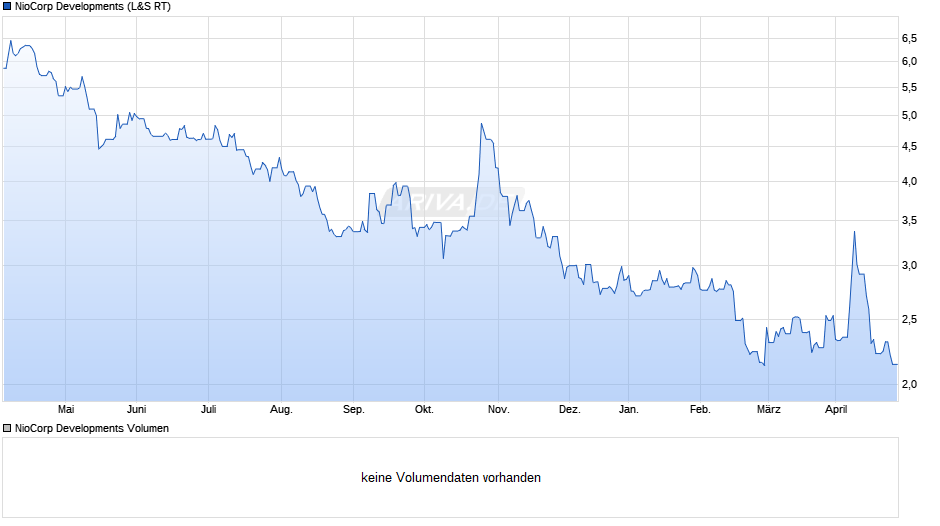
Im März wurden die Aktien von NioCorp zum ersten Mal an der technologielastigen Nasdaq-Börse notiert. Die Aktie stürzte im April ab und hat sich bis heute nicht erholt. Die Aktienkurse fielen um 60 %.
Einige Investoren, darunter auch einige der 5300 in Nebraska lebenden, sind ungeduldig mit der Zusicherung, dass 15 Jahre nach dem Erwerb des ersten Grundstücks in Johnson County eine größere Finanzierung auf dem Weg ist.
Auf der jährlichen Aktionärsversammlung am vergangenen Freitag sprach CEO Mark Smith von einer neuen Finanzierungsstrategie, die er als "Eckpfeiler" bezeichnete, um die für den Bau der Mine erforderlichen Investitionen in Milliardenhöhe anzuziehen.
Die Strategie von NioCorp für das kommende Jahr beruht darauf, von der EXIM, der Export-Import-Bank der US-Regierung, staatliche Darlehen zu erhalten. Die Behörde fördert und finanziert traditionell US-Unternehmen im Ausland. Kürzlich hat die EXIM ihre Finanzierungsmöglichkeiten auf Projekte innerhalb der Vereinigten Staaten ausgeweitet, einschließlich der Unterstützung von "kritischen Mineralienprojekten". In Elk Creek sollen Niob, Scandium und eine Reihe von Seltenerdelementen gefördert werden. Es wird befürchtet, dass diese Elemente hauptsächlich von anderen Nationen produziert werden.
Bill Kelly von Nebraska Public Media sprach mit dem Vorsitzenden Mark Smith, nachdem die Jahresversammlung vertagt worden war. (Dieses Interview wurde aus Gründen der Länge und der Klarheit des Inhalts bearbeitet).
Bill Kelly (Nebraska Public Media): Wie hoch ist der Finanzierungsbetrag, den Sie nach dieser letzten Diskussion anstreben, um sowohl die Mine als auch die Verarbeitungsanlagen rentabel zu machen?
Mark Smith (CEO, NioCorp): Die Kapitalschätzung, die wir heute verwenden, beträgt 1,2 Milliarden Dollar. Das ist das, was wir in Bezug auf die Gesamtfinanzierung anstreben. Im Idealfall hätten wir etwa 800 Millionen Dollar an Schulden und 400 Millionen Dollar an Eigenkapital. Es wird eine Kombination dieser Dinge oder vielleicht eine Mischfinanzierung sein, um die endgültige Zahl zu überbrücken. Aber wir wissen, was das Ziel ist, und das sind 1,2 Milliarden Dollar.
Kelly: In den letzten sechs Monaten hat sich die Diskussion nicht nur auf die Suche nach Investoren verlagert, sondern auch darauf, wie wichtig es ist, die staatlichen Darlehen zu erhalten. Inwieweit ist das in den letzten Jahren neu?
Smith: Eine sehr gute Frage, was das Timing angeht, denn wir sprechen mit der EXIM Bank, der US EXIM Bank, schon seit über einem Jahr, eigentlich seit fast zwei Jahren. Das heißt, seit fast zwei Jahren. Wir haben also nicht nur XM das Projekt vorgestellt, sondern auch mit dem Verteidigungsministerium gesprochen, wir haben auch mit dem Verteidigungsministerium gesprochen, wir nehmen die Position der kritischen strategischen Mineralien sehr ernst.
Diese vierköpfige Gruppe in unserem Managementteam setzt sich schon seit langem dafür ein, dass wir über Lieferketten für kritische strategische Mineralien verfügen. Wir sind entschlossen, dies zu erreichen. Und wir wollen, dass die Bundesregierung versteht, wie wichtig das ist. Ich glaube, sie verstehen es jetzt.
Kelly: Können Sie mir eine Spanne nennen, wie hoch der Kredit sein könnte, den Sie beantragen?
Smith: Ja, ich meine, wir streben eine Verschuldung von über 800 Millionen Dollar für dieses Projekt an. Und die Interessensbekundung, die wir letztes Jahr von der EXIM Bank erhalten haben, zeigte das Interesse an einer Finanzierung von 800 Millionen Dollar. All das ist also schön. Und noch einmal, in der idealen Welt. Das ist es, was wir anstreben. Letzten Endes müssen wir die wirtschaftliche und technische Fähigkeit zur Förderung dieser Mineralien nachweisen, um Kredite in Höhe von 800 Millionen Dollar zu erhalten, da dies auf einer sehr kommerziellen Basis geschehen wird. Ich meine, nur weil es sich um eine US-Regierung handelt, bedeutet das nicht, dass sie ein höheres Risiko eingehen oder irgendetwas anderes, das die normalen Anforderungen einer Geschäftsbank übertreffen muss.
Kelly: Sie haben erwähnt, dass auch das (europäische Autounternehmen) Stellantis immer noch an einer Investitionsrolle interessiert ist?
Smith: Richtig.
Kelly: In welchem Umfang?
Smith: Das kann ich nicht verraten, weil wir es nicht öffentlich bekannt gegeben haben. Und das wäre eine selektive Offenlegung. Ich bitte also um Entschuldigung.
Kelly: Sie sagten, dass es ein großes Interesse gibt, sobald dieser Eckpfeiler (der Kredite und des Stellantis-Geschäfts), wie Sie es nennen, vorhanden ist. Wenn Sie von großem Interesse in der Finanzwelt sprechen, meinen Sie das? Fünf? Sind das ein paar Dutzend? Sind es ein paar 100?
Smith: Ich glaube, es gibt eine Liste von Leuten, die wir sozusagen auf dem Laufenden halten und die wir anrufen, wenn es Neuigkeiten (zum Projekt) gibt, um sicherzustellen, dass sie auf dem Laufenden sind. Das sind wahrscheinlich 20 oder weniger. Aber die Zahl derer, mit denen wir Gespräche geführt haben, geht in die Hunderte.
Kelly: Handelt es sich bei den 20 Personen auf dieser Liste um Einzelinvestoren? Investmentgesellschaften?
Smith: In der Regel handelt es sich um institutionelle Anleger.
Kelly: Sie hatten von einigen Investoren gesprochen, die in den letzten Jahren kurz vor einer Einigung standen. Was geschah? Warum haben sie sich nicht entschieden, weiterzumachen?
Smith: Sie haben sich nicht "nicht entschieden", weiterzumachen. Das möchte ich ganz klar sagen. Und mit einem von ihnen sprechen wir immer noch. Sie mussten einen Prozess durchlaufen, bei dem sie einige sehr vielseitige Vermögenswerte in Sicherheiten umwandeln und dann im Grunde einen Private-Equity-Fonds gründen mussten. Sie durchlaufen diesen Prozess noch immer.
Es handelt sich um einen stark regulierten Bereich. Sie haben sehr hart daran gearbeitet, dies zu verwirklichen. Sie haben wahrscheinlich über 100 Millionen Dollar ausgegeben, um dorthin zu gelangen, wo sie heute sind, und sie sind noch nicht ganz am Ziel. Aber wir bleiben in Kontakt mit dieser Einrichtung.
Kelly: Dennoch müssen diese bekannten Namen erst noch über einen längeren Zeitraum hinweg in Erscheinung treten. Was hat sie zurückgehalten? Nun, Sie haben sehr gute Argumente, was den Verstand, die Lebensfähigkeit und die Produktverfügbarkeit angeht. Aber sie stellen den Scheck noch nicht aus.
Smith: Nein, das kann ich nicht bestreiten. Sie haben Recht. Wir haben noch keine große Finanzierung auf die Beine gestellt. Ich denke, dass die Strategie, auf die wir uns zubewegen, wirklich angemessen ist.
Wenn man ein Unternehmen wie die EXIM Bank dazu bringt, ein Term Sheet für etwa 800 Millionen Dollar zu erstellen, dann zieht das die Aufmerksamkeit all dieser anderen Akteure auf sich, denn sie (die EXIM) führen eine Due-Diligence-Prüfung durch, bevor sie das Term Sheet für 800 Millionen Dollar ausstellen. Es geht um eine Risikobewertung.
Die ganze Zeit, die ich hier bin, haben wir versucht, die Risiken des Niobprojekts Elk Creek zu minimieren. Deshalb machen wir die Bohrungen, die wir machen. Deshalb betreiben wir die Metallurgie, die wir betreiben. Es steht außer Frage, dass wir die Mineralien gewinnen können. Es steht außer Frage, dass die Mineralien da draußen sind. Jetzt müssen wir nur noch die Finanzierung auf die Beine stellen, um sie zu fördern. Aber wir haben eine Menge Risiken eliminiert.
Kelly: Wenn die Finanzierung in den nächsten Jahren nicht zustande kommt und die Kredite immer noch nicht vergeben sind, wie steht es dann um die Fähigkeit von NioCorp, den Betrieb aufrechtzuerhalten und weiterhin Leute wie die Landbesitzer in Nebraska für diese Mineralienrechte zu bezahlen?
Smith: Wissen Sie, das ist eine schwierige Frage. Denn immer, wenn man sich auf den Weg macht, um Geld zu beschaffen, weiß man nicht, ob man in der Lage sein wird, Geld zu beschaffen oder nicht. Das ist eine der schönen Seiten des CEO-Daseins, dass ich jeden Abend ins Bett gehe und mich frage, ob das funktionieren wird oder nicht. Aber wissen Sie was, in den letzten 10 Jahren haben wir das wirklich gut hinbekommen.
Wir bringen das Projekt voran, wir müssen bei der Finanzierung viel besser werden, VLA. Ich erkenne das ganz klar an und hebe meine Hand dafür, dass ich es besser machen muss als bisher, dass ich Ihnen sage, dass ich mich hier absolut engagiere, dass ich viel persönliches Geld hineingesteckt habe, dass ich dem Unternehmen Geld geliehen habe, dass ich dieses Unternehmen weiter am Leben erhalten werde, wenn das notwendig ist, zumindest im Rahmen meiner Möglichkeiten.
Kelly: Wie würden Sie das vergangene Jahr von NioCorp charakterisieren, seit das Unternehmen sich für die NASDAQ-Börse entschieden hat?
Smith: Wie bereits im Aktionärsbrief erwähnt, waren wir alle sehr enttäuscht über den SPAC-Deal. Es hat sich einfach nicht so entwickelt, wie wir es wollten oder wie wir es uns vorgestellt hatten. Und ich glaube, ich kann im Namen aller Mitglieder des Managementteams, die heute hier anwesend sind, eines mit Sicherheit sagen.
Das lag nicht daran, dass wir uns nicht angestrengt hätten. Wir waren mit ganzem Herzen bei der Sache.
Kelly: Sind Sie überrascht, dass der Aktienkurs im letzten Jahr so niedrig geblieben ist?
Smith: Wissen Sie, wenn ich vorhersagen könnte, wie sich der Aktienkurs entwickelt, wäre ich vielleicht nicht im Bergbau tätig. Wir können nicht vorhersagen, wie er sich entwickeln wird.
Ich will hier nicht defensiv sein. Ich versuche, das Ganze sehr sachlich zu sehen. Schauen Sie sich doch einmal fast alle Bergbauaktien an. Alle haben einen erheblichen Rückgang ihres Aktienkurses erlebt. Es geht nicht nur um NioCorp (und) projektentwickelnde Bergbauunternehmen. Es sind auch die großen Bergbauunternehmen.
Kelly: Was ist die wichtigste Botschaft, die Sie Ihren Aktionären auf der heutigen Veranstaltung vermitteln wollten?
Smith: Ich denke, dass das Jahr 2024 ein Wendepunkt für uns sein könnte.
Kelly: Das haben Sie schon einmal gesagt.
Smith: Das habe ich. Das habe ich, und ich habe jetzt ein ganz anderes Gefühl dabei. Denn wir haben es hier nicht mehr mit einem Fonds zu tun, der einen Fonds einrichten muss. Wir haben es mit der U.S. EXIM Bank zu tun. Sie haben alles, was sie brauchen, um dieses Projekt mit 800 Millionen Dollar zu finanzieren. Es ist also einfach ein anderes Gefühl.
Kelly: Sie verstehen, dass es mehr Skeptiker gibt.
Smith: Wenn im Jahr 2025 nichts passiert, wird es wieder zig Millionen Veröffentlichungen in den sozialen Medien geben, die darüber berichten, dass ich den Zeitplan nicht eingehalten habe. Aber wissen Sie, ich bin der CEO. Ich bin der Cheerleader. Ich muss die Sache so schnell wie möglich vorantreiben, damit wir so schnell wie möglich eine Finanzierung bekommen.
Wenn ich heute hier vor Ihnen und vor meinem Team säße und sagen würde: "Oh, wir machen uns keine Sorgen, wenn es '27 oder '28 passiert. Ich glaube, das würden Sie auch nicht respektieren. Ich werde mich sehr anstrengen. Wir werden die Finanzierung so schnell wie möglich auf den Weg bringen. Ich sehe einen Weg, der uns 2024 ans Ziel bringt. Ich werde so hart arbeiten, wie ich kann, um das zu erreichen.
Originaltext des Interviews:
NioCorp chief knows about skeptics; predicts watershed year.
NioCorp chief knows about skeptics; predicts watershed year.
By Bill Kelly, Senior Producer/Reporter Nebraska Public Media
Jan. 22, 2024, 9 a.m.
NioCorp CEO Mark Smith told Nebraska Public Media this "could be a watershed year" for the company.
He was reminded he's made such optimistic predictions in the past.
"It's just a different feeling," he said.
Smith sat for an interview with reporter Bill Kelly following the company's annual shareholder's meeting in Centennial, Colorado.
It’s been an especially tough year for the company intending to develop a niobium and scandium mine in Southeast Nebraska.
In 2023, management touted NioCorp’s merger with the investment company GX II Acquisition in the hopes it would result in millions of additional dollars to begin construction of its proposed niobium mine near Elk Creek, Nebraska. The money didn’t come.
The tech-heavy Nasdaq Stock Exchange listed NioCorp shares for the first time in March. The stock tanked in April and has yet to recover. Share prices dropped 60%.
Some investors, including some of the 5300 living in Nebraska, express impatience with assurances that major funding is on its way 15 years after the first land was acquired in Johnson County.
At its annual Speaking to shareholders meeting last Friday, CEO Mark Smith spoke of a new financing strategy which he calls the “cornerstone” for attracting the billion-dollar investment needed to construct the mine and on-site mineral processing facilities.
NioCorp’s strategy in the coming year relies on obtaining federal government loans from EXIM, the U.S. government’s Export-Import Bank. The agency traditionally promotes and finances U.S. businesses abroad. Recently, EXIM expanded its financing options to include projects inside the United States, including support for “critical minerals projects.” The Elk Creek would produce niobium, scandium, and a range of rare earth elements. There is concern those elements are primarily produced by other nations.
Bill Kelly with Nebraska Public Media spoke with Chairman Mark Smith after the annual meeting adjourned. (This interview has been edited for length and clarity of content.)
Bill Kelly (Nebraska Public Media): What is the amount of financing you're seeking, after this last discussion, to make both the mine and the processing facilities viable?
Mark Smith (CEO, NioCorp): The capital estimate that we're using today is $1.2 billion. That's what we're seeking in terms of total financing. Our ideal situation would be about $800 million in debt and $400 million in equity. It'll be some combination of those things or maybe some hybrid financing to bridge the final number. But we know what the target is, and it's $1.2 billion.
Kelly: Within the past six months, the discussion has kind of shifted, not just from finding investors but to the importance of getting the federal loans as well. To what degree is that new over the past couple of years?
Smith: Very good question in terms of timing because we've actually been speaking with EXIM Bank, US EXIM Bank, for well over a year, actually, almost two years now. Take that back almost two years. So, we've been introducing ourselves introducing the project, not just to XM, we we've talked to DOD (Department of Defense), we've talked to DOD as well, we take the position of critical strategic minerals very seriously.
This group of four in our management team has been advocating the importance of having us supply chains for critical strategic minerals for a long, long time. We're committed to making that happen. And and we want the federal government to understand how important it is. I think they understand now.
Kelly: Can you give me a range as to how large a loan you might be seeking?
Smith: Yeah, I mean, we're looking to have upwards of $800 million in debt for this project. And the letter of interest that we received from EXIM Bank last year indicated the interest in funding $800 million. So, all of that is nice. And again, in the ideal world. That's what we seek. At the end of the day, we have to demonstrate and the economics and the and the technical capability producing these minerals to support $800 million of loans because it will be done on a very commercial basis. I mean, just because it's a US government doesn't mean they take any higher levels of risk or anything else you have to beat normal commercial banking requirements.
Kelly: You've mentioned also the (European auto company) Stellantis is still interested in having an investment role as well?
Smith: Correct.
Kelly: How large?
Smith: That is something I cannot disclose, because we have not publicly stated what that is. And that would be selective disclosure. So, I apologize.
Kelly: You said there's a lot of interest once, as you refer to it, this cornerstone (of loans and the Stellantis deal) is in place. When you say lots of interest in the finance world, is that? Five? Is that a couple of dozen? Is that a couple 100?
Smith: I think there’s a list of people that we keep very warm, so to speak, who if there's any updates (with the project), we call them and make sure they got that update. That's probably 20 or less. But the number of people that that we have been in discussions with has been in the hundreds.
Kelly: On that list of 20, are they individual investors? Investment entities?
Smith: They tend to be institutional investors.
Kelly: You had talked about a couple of investors that were very close (to reaching a deal in the past few years). What happened? Why didn't they decide to move forward?
Smith: They didn't ‘not decide’ to move forward. Let me make that very clear. And with one of them in particular, we're still talking to (them). They had to go through a process of taking some very eclectic assets, turning those into collateral, and then creating a private equity fund, basically. They are still going through the process of setting that up. It's a highly, highly regulated area. They have been working very hard to make this happen. They have probably spent over $100 million to get where they are today and they're not quite there yet. But we stay in touch with that entity.
Kelly: Nonetheless, those well-known names have yet to step up over an extended period of time. What has been holding them back? Well, you make a very good case about the mind and its viability and the product availability. But they aren't actually writing the check yet.
Smith: No, I can't argue the point. You're right. We don't have big financing lined up yet. I think where we're headed is a really appropriate strategy.
If you get an entity like EXIM Bank to come in and provide a term sheet for something around $800 million, that attracts the attention of all these other players, because they (EXIM) do a level of due diligence before they give you that term sheet for 800 million. It's a risk evaluation is what it is.
The entire time I've been here is we're trying to mitigate the risks of (the Elk Creek niobium) project. That's why we do the drilling that we do. That's why we do the metallurgy we do. There's no question we can recover the minerals. There's no question the minerals are out there. Now we have to get the financing in place to extract them. But we've eliminated a lot of risk.
Kelly: In the coming couple of years, if the financing does not come through, and the loans are still not through, where does NioCorp stand in being able to maintain itself operationally and continue to pay people like the landowners in Nebraska for those mineral rights?
Smith: You know, it's a difficult question. Because anytime you go out to raise money, you don't know if you're going to be able to raise money or not. That's, that's one of the beauties of being a CEO is that I get to go to bed every night, and wonder if that's going to work or not. But you know, what, in the last 10 years, we've done really well with that.
We are advancing the project, we need to do a lot better on the financing, VLA. I clearly recognize that and I put my hand up for that I've got to, I've got to do better than what I've done, that I will tell you that I am absolutely committed to this, I have put a lot of personal money into this, I have loaned the company money, I will continue to keep this company alive, if that's what is necessary, at least within my capabilities.
Kelly: How would you characterize NioCorp’s past year since it chose to join the NASDAQ exchange?
Smith: Again, we will reiterate, as was in the shareholder letter, we were all very disappointed in the SPAC deal. It just did not pan out the way that we wanted to or the way we thought it would. And the one thing I think I can say safely on behalf of all for the management team members in here today. It wasn't because of a lack of effort. We put our hearts into that thing.
Kelly: Are you surprised that it remained as flat as it has that stock price over the past year?
Smith: You know, if I were able to predict what the stock price was going to do, maybe I wouldn't be in mining. We can't predict what it's going to do.
I'm not trying to be defensive about this. I'm trying to be very factual about this. Take a look at almost all of the mining stocks right now. Everybody has experienced a significant reduction in their share price. It’s not just NioCorp (and) project development type mining companies. These are the big mining companies as well.
Kelly: What's the main message you wanted to convey to your shareholders coming out at today's event?
Smith: I think 2024 could be a watershed year for us.
Kelly: You've said that before.
Smith: I have. I have and I have a whole different feeling about it right now. Because we're not dealing with a fund that has to set up a fund anymore. We're dealing with the U.S. EXIM Bank. They have everything they need in their accounts to fund this project at $800 million. So, it's just a different feeling.
Kelly: You understand that there are more skeptics.
Smith: In 2025, if nothing happens, there will be umpteen zillion social media publications again talking about how I've missed the timelines. But you know, I'm the CEO. I'm the cheerleader. I have to keep pushing this thing as hard as we possibly can to get financing as fast as we can.
If I sat here today in front of you and in front of my team and said, ‘Oh, we're not worried about it if it happens in ‘27, or ‘28. I don't think you would respect that either. I'm going to push hard. We're going to get this financing in as fast as we possibly can. I see a path to get us there in 2024. I'm going to work as hard as I can to make that happen.
Link:
nebraskapublicmedia.org/en/news/...s-predicts-watershed-year/

 Zurück