Aufrufe: 5
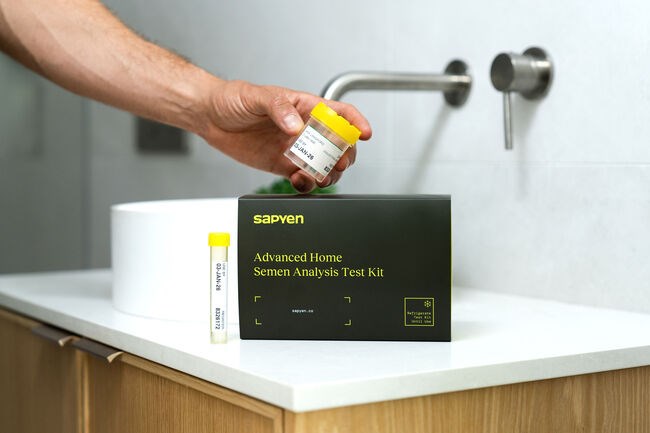
To view an enhanced version of this graphic, please visit:
https://images.newsfilecorp.com/files/9405/297960_581b577fd42e9bf4_001full.jpg
The launch marks a significant shift in how male fertility preservation is positioned and accessed. Sapyen's position is simple: fertility preservation should happen before urgency enters the equation.
The programme combines at-home semen analysis, laboratory review through accredited UK laboratory infrastructure, and a structured ninety-day fertility optimisation phase prior to cryopreservation. The company says the model was intentionally designed around accessibility and behavioural adoption rather than traditional clinic workflows.
"Male fertility has largely existed as a reactive category," said Ash Ramachandran, Chief Executive Officer of Sapyen. "Most men encounter sperm freezing at the exact moment something has already gone wrong or time pressure has entered the conversation. We think the entire category has been framed backwards."
Under the programme, men begin with an at-home diagnostic semen analysis before entering a ninety-day protocol aligned to the biological cycle of sperm production. The protocol focuses on lifestyle, supplementation, and fertility health optimisation prior to freezing.
"The sperm sample produced today reflects biology from months earlier," Ramachandran said. "That includes stress, testosterone exposure, sleep, diet, alcohol use, illness, heat exposure, and age. Fertility is dynamic, even when men assume it is permanent."
Following optimisation, samples are cryopreserved and stored within accredited UK laboratory systems.
The company believes historical pricing structures prevented sperm freezing from becoming a mainstream decision for men. Traditional pathways frequently required multiple appointments, clinic-based collection, fragmented laboratory handling, and pricing structures that pushed preservation into the category of specialist intervention rather than preventative healthcare.
Sapyen instead built the programme around home collection, postal logistics, and centralised processing infrastructure.
"The economics of sperm freezing never made sense at population scale," Ramachandran said. "Insurance only works when people can access it before the problem exists. Historically, sperm freezing has been priced and structured in a way that almost guaranteed most men would defer it."
The company expects demand from men delaying parenthood, couples pursuing IVF, patients planning vasectomy, men commencing testosterone replacement therapy, and younger consumers increasingly approaching fertility with the same proactive mindset now seen in preventative health and longevity categories.
Sapyen says the launch reflects a broader shift occurring within fertility itself, where diagnostics, preservation, and reproductive planning are increasingly moving upstream into the home rather than beginning inside clinics.
"For decades, fertility systems waited for people to become patients," Ramachandran said. "The future of fertility is earlier, more accessible, and significantly more proactive than that."
The £1 sperm freezing programme is now available across the United Kingdom through Sapyen.
Name: Ash Ramachandran
Company: Sapyen
Email: ash@sapyen.co
Website: https://www.sapyen.co/
To view the source version of this press release, please visit https://www.newsfilecorp.com/release/297960
Hinweis: ARIVA.DE veröffentlicht in dieser Rubrik Analysen, Kolumnen und Nachrichten aus verschiedenen Quellen. Die ARIVA.DE AG ist nicht verantwortlich für Inhalte, die erkennbar von Dritten in den „News“-Bereich dieser Webseite eingestellt worden sind, und macht sich diese nicht zu Eigen. Diese Inhalte sind insbesondere durch eine entsprechende „von“-Kennzeichnung unterhalb der Artikelüberschrift und/oder durch den Link „Um den vollständigen Artikel zu lesen, klicken Sie bitte hier.“ erkennbar; verantwortlich für diese Inhalte ist allein der genannte Dritte.