Aufrufe: 18
The core finding: smaller, cheaper models with BRAID match or exceed larger models using traditional prompting.
Instead of letting models "think out loud" in verbose natural language, BRAID encodes reasoning as bounded logic graphs using Mermaid diagrams defining steps, branches, and verification checks explicitly. A large model generates the plan once; a cheap model executes it repeatedly. The reasoning becomes deterministic, compact, and far less prone to drift.
"BRAID is like giving every driver a GPS instead of a printed map. The agent charts its route before moving, takes the best path twice as often, and uses a quarter of the fuel."
- Armağan Amcalar, CEO of Coyotiv, CTO of OpenServ Labs, Lead Author
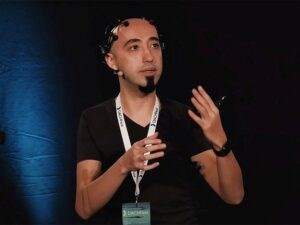
"Natural language is great for humans. It's a terrible medium for machine reasoning. BRAID is like giving every driver a GPS instead of a printed map. The agent can chart its route before moving, take the best path twice as often, and use a quarter of the fuel," Amcalar added.
Key Results
Why It Matters
Autonomous agents are scaling fast, but reasoning costs scale with them. Without a structural fix, real autonomy hits an economic wall. BRAID makes retries, self-correction, and branching strategies viable, prerequisites for agents that can operate independently at scale.
"If you can reason faster and cheaper, you can run 30 different solution paths for the price of one. That's how agents become truly autonomous."
- Armağan Amcalar
The framework has been tested with industry partners in live agent workflows. Benchmarks use recent datasets with low leakage risk, numerical masking to prevent shortcuts, and production-style cost accounting.
The insight: models already understand structure better than prose Instead of letting models "think out loud," BRAID replaces free-form reasoning with bounded, machine-readable reasoning graphs, expressed using Mermaid diagrams. These diagrams encode logic as explicit flows: steps, branches, checks, and verification loops. ZA
The result is a reasoning process that is:
Here's a simplified example for a mermaid format:
flowchart TD
A[Read constraints] -> B{Check condition 1}
B ->|Yes| C[Apply rule A]
B ->|No| D[Apply rule B]
C -> E[Verify solution]
D -> E
E -> F[Output answer]
Note: This approach enforces a more deterministic step structure while avoiding and mitigating unnecessary token usage, as each token (word, term, etc.) serves a specific role in constructing the diagram. Because the reasoning structure is clearer, smaller and cheaper models can reliably execute it.
Built for production, not just papers
The study:
Full paper: https://arxiv.org/abs/2512.15959
About Coyotiv: Engineering ecosystem partnering with companies on challenging innovative solutions, led by Armağan Amcalar.
About OpenServ Labs: Infrastructure for autonomous AI agents, focused on making multi-agent systems production-ready and economically viable.
Paper Authors: Armağan Amcalar (Coyotiv / OpenServ Labs) and Dr. Eyüp Çınar (Eskisehir Osmangazi University)
MEDIA CONTACT
Deniz Kaynak, Head of Marketing, Coyotiv
deniz@coyotiv.com
X: @dashersw | @coyotiv | @openservai
To view the source version of this press release, please visit https://www.newsfilecorp.com/release/286412
Hinweis: ARIVA.DE veröffentlicht in dieser Rubrik Analysen, Kolumnen und Nachrichten aus verschiedenen Quellen. Die ARIVA.DE AG ist nicht verantwortlich für Inhalte, die erkennbar von Dritten in den „News“-Bereich dieser Webseite eingestellt worden sind, und macht sich diese nicht zu Eigen. Diese Inhalte sind insbesondere durch eine entsprechende „von“-Kennzeichnung unterhalb der Artikelüberschrift und/oder durch den Link „Um den vollständigen Artikel zu lesen, klicken Sie bitte hier.“ erkennbar; verantwortlich für diese Inhalte ist allein der genannte Dritte.