Benachrichtigungen von ARIVA.DE
(Mit der Bestellung akzeptierst du die
Datenschutzhinweise)
Vielen Dank, dass du dich für unseren Newsletter angemeldet hast. Du erhältst in Kürze eine E-Mail mit einem Aktivierungslink.
Leider können wir deine Anfrage auf diesem Weg nicht entgegennehmen. Bitte schreibe uns an: portal.support@ariva.de
Doral Financial Termine
Keine Termine bekannt.
Doral Financial Prognose 2026: Einstufung & Empfehlung von Analysten
Doral Financial Kursziel 2026
Die Doral Financial Kurs Performance für 2026 liegt bei -.
Stammdaten
Aktienanzahl
6,59 Mio.
Aktientyp
Stammaktie
Community-Beiträge zu Doral Financial
Community-Beiträge
Aktuellste Threads
FernandeZ
Dann muss ich das hier wohl alleine genießen
:) Mein Geld scheint Step by Step zurück zu kommen...
FernandeZ
Alle raus?
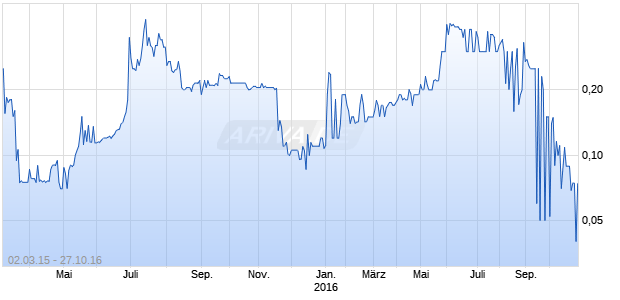
Hallo? Bekommt hier ausser mir noch den Anstieg mit?! Ich such und such nach News die eine knapp 500% Anstieg der letzten 3 Monate rechtfertigt... Aber ich werde nicht fündig. Wisst ihr mehr?
FernandeZ
Lehman Case Shows Blurred Lines on Repos
Quelle: http://www.nytimes.com/2015/07/08/business/dealbook/lehman-case-shows-blurred-lines-on-repos.html?_r=0
In a little-noticed recent opinion, a distressed debt trader came awfully close to undermining the basis for the repo safe harbors. It did so mostly by making a common sense argument.
But the United States Court of Appeals for the Second Circuit blocked that possibility by noting that distressed debt trader was essentially trying to have it both ways.
The case arose out of the Lehman Brothers bankruptcy, or more precisely, the liquidation that is dealing with Lehmans brokerage subsidiary.
In 2000 and 2001, Doral Financial of Puerto Rico entered into a repo agreement with Lehman whereby Doral could sell various securities to Lehman in exchange for cash. Doral promised to buy back those securities at a set point in the future, for slightly more than the cash it had received from Lehman.
If this all looks vaguely like a secured loan, it should. Thats what most repo transaction are.
Nonetheless, under both the bankruptcy code and the Securities Investor Protection Act, repo transactions are not treated like ordinary secured loans. Instead, they are exempt from the automatic stay and other features of normal insolvency law. This is just like the treatment of swaps and settlement payments under the much- and long-maligned by academics at least safe harbors.
In the case before the circuit court, Doral wanted to retrieve securities that it had given to Lehman when the Wall Street firm failed. But Doral ultimately sold whatever claims it had against the Lehman estate to distressed debt investors.
The investors in turn wanted to argue that Doral had been a customer of Lehmans brokerage subsidiary. Being a customer would have entitled the investors to preferred treatment over other unsecured creditors in the SIPA liquidation proceedings.
It seems that the securities that Doral had given Lehman in exchange for cash had gone up in value. In other words, under the repo agreement, the distressed debt investors had a contractual right to buy those securities back from Lehman at a fixed cost that was now lower than the value of the securities.
Or more directly, as the holder of Dorals claims, the investors could claim damages for Lehmans breach of contract in failing to resell the securities. The measure of those damages would be the difference between the current market value of the securities and the contractual buyback price.
But that breach of contract claim would be of little value if it were a mere unsecured claim in the Lehman brokerage SIPA proceeding. Much better to be a priority customer claim.
The argument for being a customer was essentially that the sale of the securities to Lehman was a sham transaction, with all the economic risk of the securities remaining with Doral.
In short, the investors argued this was not really a sale, but something more like a bailment, or the delivery of something without a transfer of ownership. Basically Doral pawned some securities at the Lehman Brothers pawnshop.
If the distressed debt investors had succeeded in this argument, it would have raised serious questions about why repo transactions are not treated like secured loans.
Imagine a bankruptcy case where instead of the repo lender (Lehman) it is the repo borrower (Doral) that is in bankruptcy. Couldnt it be argued that the borrower has a right to get its securities back, because they were never really sold in the first place?
As it happens, in this case the appeals court noted that Doral had signed a contract saying that it was transferring full title to Lehman. Its hard to argue that Lehman was nonetheless holding the securities in trust.
But it does show how hard it is for sophisticated parties to know precisely where their interests lie with regard to special treatment in bankruptcy. Which might suggest that both the bankruptcy code and the Securities Investor Protection Act might benefit from a bit less of the special treatment of swaps, derivatives and repos.
Sometimes it makes better policy, and is just easier, to treat a secured loan like a secured loan.