Aufrufe: 90
 Audio
Audio
 Teilen

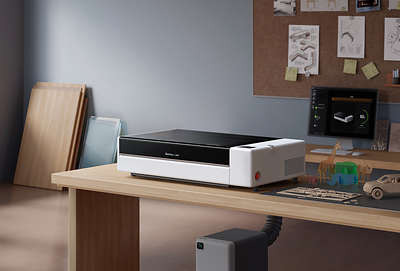
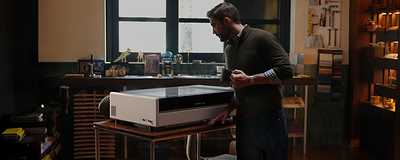
| EQS-News: Bambu Lab / Key word(s): Miscellaneous/Product Launch Big Job. Light Work - Bambu Lab Launches R1, A 55W CO₂ Laser Cutter & Engraver 22.09.2026 / 16:05 CET/CEST The issuer is solely responsible for the content of this announcement. AUSTIN, Texas, Sept. 22, 2026 /PRNewswire/ -- Bambu Lab today announced the launch of the R1, a 55W CO2 laser cutter and engraver designed for the kind of work that used to require a dedicated workshop: cutting and engraving wood, clear acrylic and leather, engraves glass, stone and coated metals, aligns its own optical path automatically, in a machine safe to run at home. The R1 opens a new category within the Bambu ecosystem and marks a big step toward personal manufacturing, making more room for makers to create, and more materials in their hands. With the R1, a maker can take a design from a sheet of black walnut plywood or acrylic to a finished piece, in one machine, on their own bench.
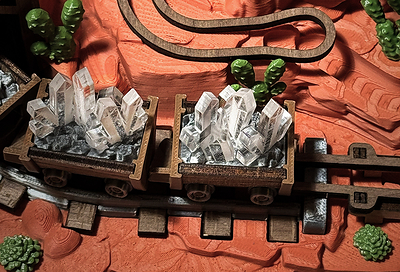
One Laser, More Materials The R1 runs a 55W CO2 laser. It cuts and engraves wood, acrylic, leather, paper and fabric, and engraves glass, stone and coated metals. Clear acrylic and glass are the notable ones: a diode laser passes straight through them, a CO2 laser does not, so the R1 can cut and engrave both. Being a CO2 laser also means cutting thicker wood than a diode can, faster and with less charring along the edge - up to 18 mm black walnut plywood and 20 mm acrylic. The working area is 600 × 300 mm, and with the Conveyor accessory the R1 takes stock up to 3000 mm long - longer than its own bed, and enough to bring furniture-scale work within reach. It engraves on curved objects as well. Anyone familiar with Bambu Lab's 3D printers will recognize the approach. Those machines took a process that used to demand tuning, calibration and patience and made it something a person could simply run. A CO2 laser has its own version of that problem — the setup work that stands between you and the first cut — and that is what the R1 takes off your hands. A First for a Laser Cutter: It Aligns Itself On a CO2 laser, the beam travels to the lens by bouncing off a set of mirrors. If those mirrors are even slightly off, the beam drifts off course, and cutting power and precision drop, and in the worst case the machine is effectively unusable. Keeping them aligned is something every CO2 laser needs, and on most machines it is a manual chore: tape thermal paper over a mirror mount, fire a test shot, read the burn mark, turn the mirror by hand, and fire again - mirror by mirror, and again whenever things drift. For someone new to it, it can take an hour. Auto Laser Alignment does it for you. Mount the Laser Alignment Sensor - a plate with a crosshair - on the toolhead, and the machine reads the beam off the crosshair, finds where the path is off, and corrects it with motorized mirror actuators. No paper, no test shots, no turning screws. In about one minute, it is done. Only from Bambu Lab. TriSense System: What You Mark Is What You Cut Before it cuts, the R1 works out three things - where the material and design sit, how high the surface is, and how the toolhead is moving across it. The TriSense System handles all three through cameras, lasers and encoders working as one:
In practice, that means engraving evenly across a curved object such as a bowl, finding and detailing objects small enough to be fiddly by hand, and tracing a printed outline - the shape of a sticker, for instance - then cutting along it with accuracy under 0.2 mm. The Motion Technology Behind Bambu Lab's 3D Printers A laser toolhead starts, stops and changes direction thousands of times in a single job, and how cleanly it does that decides how the work looks. The algorithms handling it on the R1 are the ones proven on Bambu Lab 3D printers, retuned for a laser:
Safe and Compact Enough for a Home Workspace
*Comparison based on external footprint vs. representative consumer CO₂ lasers with equivalent working area, as measured by Bambu Lab. Actual size varies by model.
Note: When used with the Riser Base or the Conveyor, the enclosure is no longer complete and the R1 changes from an enclosed Class 1 device to a Class 4 device, requiring CO2 laser-safety eyewear and intended for professional use by trained personnel only. Part of the Bambu Experience The R1's hardware is built so the first cut does not require a specialist's setup. The same idea carries into how you run it. Same MakerWorld. Same Bambu account. Same familiar workflow in Bambu Suite, on Windows and macOS. If you already use a Bambu Lab printer, the R1 does not ask you to learn a new way of working - it fits into the ecosystem you know, so there is less to learn and more you can start making right away. If You Already Print, Here's More to Make. A 3D printer already covers shape. The R1 extends the same bench into materials a printer does not form: wood, clear acrylic, leather, paper and fabric, plus engraving on glass, stone and coated metal. Print the structure, fittings and interior detail; cut and engrave the parts that need grain, a clean edge, or light through acrylic.
Target Audiences The R1 is designed for:
Pricing and Availability R1: US: $2,499.00 (excl. tax / incl. shipping) EU:€2,499.00 (incl. tax / excl. shipping) Pre-orders start on September 22, 2026, through the official Bambu Lab store, with shipping starting in October. A short-focus lens is included. Riser Base, Conveyor, Rotary attachment, medium and long focus lenses, Vision Encoder, E1 Pro Air Purifier and Auto Fire Extinguishing System are sold separately.
 22.09.2026 CET/CEST Dissemination of a Corporate News, transmitted by EQS News - a service of EQS Group. The issuer is solely responsible for the content of this announcement. The EQS Distribution Services include Regulatory Announcements, Financial/Corporate News and Press Releases. View original content: EQS News |
2403396 22.09.2026 CET/CEST
Hinweis: ARIVA.DE veröffentlicht in dieser Rubrik Analysen, Kolumnen und Nachrichten aus verschiedenen Quellen. Die ARIVA.DE AG ist nicht verantwortlich für Inhalte, die erkennbar von Dritten in den „News“-Bereich dieser Webseite eingestellt worden sind, und macht sich diese nicht zu Eigen. Diese Inhalte sind insbesondere durch eine entsprechende „von“-Kennzeichnung unterhalb der Artikelüberschrift und/oder durch den Link „Um den vollständigen Artikel zu lesen, klicken Sie bitte hier.“ erkennbar; verantwortlich für diese Inhalte ist allein der genannte Dritte.













 View original content to download multimedia: