




- Community-Beiträge
- Aktuellste Threads


Asset Klassen
Kurslisten
Hinweis zu Meine Suchen: Meine Suchen sind aufgrund der vielfachen Bitte aus der Community wieder unter Mein Portfolio zu finden.
Meistgeklickt
Hot News
Heiße Themen (24h)

| Geld/Brief | 38,83 $ / 43,63 $ |
| Spread | +12,36% |
| Schluss Vortag | 44,18 $ |
| Gehandelte Stücke | 161.704 |
| Tagesvolumen Vortag | 7.616.907 $ |
| Tagestief 43,15 $ Tageshoch 44,15 $ | |
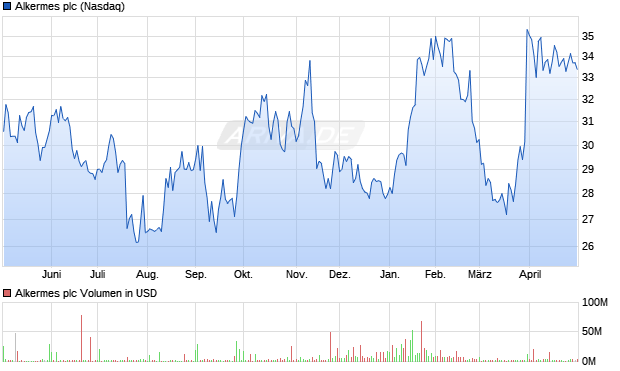
| 52W-Tief 27,00 $ 52W-Hoch 55,67 $ | |
| Jahrestief 27,00 $ Jahreshoch 55,67 $ | |
| Umsatz in Mio. | 1.476 $ |
| Operatives Ergebnis (EBIT) in Mio. | 303,73 $ |
| Jahresüberschuss in Mio. | 241,66 $ |
| Umsatz je Aktie | 8,75 $ |
| Gewinn je Aktie | 1,43 $ |
| Gewinnrendite | +16,37% |
| Umsatzrendite | +16,37% |
| Return on Investment | +9,55% |
| Marktkapitalisierung in Mio. | 7.294 $ |
| KGV (Kurs/Gewinn) | 19,57 |
| KBV (Kurs/Buchwert) | 2,60 |
| KUV (Kurs/Umsatz) | 3,20 |
| Eigenkapitalrendite | +13,28% |
| Eigenkapitalquote | +71,90% |

| Handelsplatz | Letzter | Änderung | Vortag | Zeit | |
|---|---|---|---|---|---|
| Frankfurt | 38,89 € | +2,10% | 38,09 € | 23.10.26 | |
| L&S RT | 38,92 € | 0 % | 38,92 € | 24.10.26 | |
| München | 39,29 € | +2,03% | 38,51 € | 23.10.26 | |
| Nasdaq | 43,61 $ | -1,29% | 44,18 $ | 23.10.26 | |
| NYSE | 43,66 $ | -1,17% | 44,175 $ | 23.10.26 | |
| NYSE American | 43,51 $ | -1,67% | 44,25 $ | 23.10.26 | |
| Quotrix | 39,28 € | +1,97% | 38,52 € | 23.10.26 | |
| Stuttgart | 38,93 € | -0,99% | 39,32 € | 23.10.26 | |
| Tradegate BSX | 39,70 € | +0,74% | 39,41 € | 23.10.26 | |
| Xetra | 39,08 € | -0,74% | 39,37 € | 23.10.26 | |
| Datum | Kurs | Volumen |
|---|---|---|
| 23.10.26 | 43,63 | 3,67 M |
| 22.10.26 | 44,18 | 7,62 M |
| 21.10.26 | 43,48 | 8,69 M |
| 20.10.26 | 44,11 | 12,6 M |
| 19.10.26 | 42,97 | 13,0 M |
| Zeitraum | Kurs | % |
|---|---|---|
| 1 Woche | 41,22 $ | +5,80% |
| 1 Monat | 42,13 $ | +3,51% |
| 6 Monate | 33,91 $ | +28,61% |
| 1 Jahr | 30,04 $ | +45,17% |
| 5 Jahre | 30,85 $ | +41,36% |

| Marktkapitalisierung | 7,29 Mrd. $ |
| Streubesitz | -9,18% |
| Währung | USD |
| Land | USA |
| Sektor | Gesundheit |
| Branche | Medikamente |
| Aktientyp | Stammaktie |
| +17,43% | BlackRock Inc |
| +5,97% | Baker Bros Advisors LP |
| +5,96% | iShares Core S&P Small-Cap ETF |
| +5,66% | Vanguard Portfolio Management, LLC |
| +5,46% | State Street Corp |
| +4,48% | Vanguard Capital Management, LLC |
| +4,02% | T. Rowe Price Associates, Inc. |
| +3,85% | Renaissance Technologies Corp |
| +3,16% | Vanguard MStar Total Stk Mkt Idx Invest |
| +2,67% | Geode Capital Management, LLC |
| +2,59% | iShares Russell 2000 ETF |
| +2,50% | Dimensional Fund Advisors, Inc. |
| +2,38% | Deep Track Capital, LP |
| +2,36% | American Century Companies Inc |
| +2,25% | Vanguard Small Cap Index |
| +2,15% | Holocene Advisors, LP |
| +1,95% | State Street® SPDR® S&P® Biotech ETF |
| +1,79% | COMMODORE CAPITAL LP |
| +1,68% | Wellington Management Company LLP |
| +1,51% | PRIMECAP Management Company |
| +1,44% | First Trust Advisors L.P. |
| +1,39% | Charles Schwab Investment Management Inc |
| +1,39% | Nuveen, LLC |
| +1,29% | NORGES BANK |
| +1,28% | Bvf Inc |
| +1,25% | Vanguard MStar Small Cap Growth Indx Inv |
| +1,09% | Fidelity Small Cap Index |
| +1,04% | First Trust NYSE Arca Biotech ETF |
| +1,02% | Vanguard Capital Opportunity Inv |
| +0,93% | iShares S&P Small-Cap 600 Growth ETF |
| +0,91% | State Street SPDR Port S&P 600 Sm CpETF |
| +0,76% | iShares Biotechnology ETF |
| +0,75% | iShares Russell 2000 Growth ETF |
| +0,64% | Vanguard Tax-Managed Small Cap Adm |
| +0,61% | Invesco S&P SmallCap Momentum ETF |
| +0,59% | American Century Small Cap Growth Inv |
| +0,58% | Vanguard Russell 2000 ETF |
| +0,57% | State Street® SPDR® S&P 600™ Sm Cp GrETF |
| +0,53% | T. Rowe Price New Horizons |
| +0,53% | Schwab US Small-Cap ETF™ |
| +107,78% | Institutionelle Aktionäre |
| +1,403% | Insider Aktionäre |
| -9,183% | Streubesitz |
| 15.05.2000 | Split | 1:2 |
&a=882907&b=&banner_ref=HASH(0x97db838)&zeitraum=6&atyp=1&ind_volume=ON&beingabe=Name%2C%20WKN%2C%20ISIN&zoom.x=0&zeitbis=&bis=1107090418.36113&bname=&cookies=HASH(0x96a1a2c)&req_host=ARRAY(0x9792774)&zeitvon=0&skalierung=log&von=0&boerse_id=1) Alkermes arbeitet mit elli Lilly und Nektar Therapeutiks mit Pfizer und Sanoi-Aventis
Alkermes arbeitet mit elli Lilly und Nektar Therapeutiks mit Pfizer und Sanoi-Aventis
Adviser Soapbox
Bated Breath for Inhaled Insulin
Scott Gottlieb, MD, 01.28.05, 6:00 PM ET
<!--OUTER BOX TABLE-->
| <!--AUTHOR SMART BOX-->< script>var fdcAuthorQuery = "?famname=&givname=&url=/2005/01/28/cz_sg_0128soapbox_inl.html";< /script><!--/AUTHOR SMART BOX--><!--BOXES SEPERATED BY BREAKS--> <!--RELATED QUOTES SMART BOX-->
<!--TODAY'S POPULAR STORIES SMART BOX-->< script src="/boxes/popstories.js">< /script><!--alternating row box-->.boxIDhead { background-color: #336699; color: #ffffff; font-weight: bold; padding:2px;}.boxIDborder { border:1px solid #003366;}.boxIDbordercolor { background-color: #336699;}.boxIDrow { background-color: #ffffff;}.boxIDrow1 { background-color: #ffffff;}.boxIDrow2 { background-color: #efefef;}.boxIDrule { background-color: #cccccc;}.boxIDspace { background-color: #ffffff;}
<!--RELATED STORIES BOX-->< script>var fdcRelStoriesQuery = "?tickers=ALKS,NKTR,LLY,PFE,SNY,ALKS,NKTR,LLY,PFE,SNY&keywords=Investing,Health Care,Healthcare,Doctor,Pharmaceutical,Biotech,Biotechnology,Drug Design,Drug Development,Inhalation,Insulin,Diabetes,Diabetics,Injection&url=/2005/01/28/cz_sg_0128soapbox_inl.html§ion=Investment Newsletters";< /script> <!--TODAY'S TOP STORIES SMART BOX-->< script src="/scripts/fdcTopStoriesBox.js">< /script>
|  | ||||||||||||||||||||||||||||||||||||||||||||||||||||||||||
|
| Click here for three "Cancer Cure" biotech stocks from the Forbes/Gottlieb Medical Technology Investor. |
Side effects have hobbled past attempts to develop inhaled versions of insulin, as well as other proteins. So far, no company has succeeded in gaining regulatory approval for the systematic delivery of a protein therapeutic through an inhaled mechanism. This time around, I think things will be different because the only obstacle may be regulatory.
To pass muster with the Food and Drug Administration (FDA), these companies are going to have to prove that the inhaled route is as effective as injected insulin. Clinical-trial data shows the inhaled insulin works. But, there has been some suggestion from earlier trials that Exubera, in particular, caused a decrease in the lung function of animals. There is also a reported increase in antibodies to the insulin, but this finding has not been shown to cause any hazardous effects.
My view is that the FDA is going to set a very high bar for approving inhaled insulin. The FDA sees delivering drugs through the pulmonary route as a different dosing form. In the FDA's view, the benefit is primarily convenience. In other words, the regulators seem to discount the fact that convenience promotes compliance, which leads to better health outcomes. Therefore, the agency will be extra-cautious in making sure inhaled insulin is safe. For example, the FDA requires two years of safety data, while other forms of injected insulin have been approved on one-year or even six-month data.
Exubera, a dry powder, is inhaled into the lungs before meals. Needles aren't used, and the drug is quickly absorbed into the bloodstream. Nektar scientists took the product through phase I clinical trials and then licensed the technology for further development and commercialization to Pfizer and Aventis. Pfizer and Aventis have a global agreement to co-develop, co-promote and co-manufacture inhaled insulin. Nektar is responsible for manufacturing the fine-insulin powders and supplying the inhalers.
Exubera is awaiting European approval. The companies are planning to file with the FDA for U.S. approval of Exubera by mid-2005. In its deal with Pfizer, Nektar will get 15 percent of all revenue from the product.
The other inhaled-insulin preparation that is in the late stages of development, but probably a few years behind exubera, is AIR Insulin, by Alkermes. Like Exubera, AIR Insulin is also dry-powder pulmonary insulin. It is in phase II clinical trials. The phase III program in type-one diabetic patients will start in 2005, to be followed by phase III trials in type-two diabetic patients.
Compared to other companies developing alternatives to injections, Alkermes says it is able to create large particles that incorporate the desirable properties of small particles. This allows the company to create simple-delivery devices that are breath activated and don't require the pressurized delivery of metered-dose inhalers. That can be a real advantage, making the product easy to use and cheap to manufacture.
The full details of the financial terms Alkermes struck with Lilly have never been disclosed, although Alkermes is expected to receive payments for hitting certain regulatory milestones, as well as royalties on eventual sales of the product.
Although insulin is the oldest treatment for diabetes, this segment has continued to perform well, with global sales increasing 15.1 percent from 2001 to reach more than $4.1 billion in 2002. The best-selling insulin in 2002 was Lilly's Humulin, with sales of about $1 billion. According to Datamonitor, 22 percent of drug-treated type-two patients in the major markets are prescribed-insulin therapy. Humulin products have been marketed in the U.S. since 1982.
Many patients fail treatment with insulin because they despise the frequent injections. Other diabetic patients do not have their blood sugar adequately controlled with oral medications, but refuse to start insulin. They need insulin, but are reluctant to start treatment because of the pain and inconvenience.
In recent studies, people with diabetes found inhaling more convenient than injecting, with 80 percent of those in inhaled-insulin trials opting to stick with the method. There have also been about 25 different surveys of more than 1,000 diabetics and doctors dating back to 1993. On average, 85 percent showed a preference for inhaled insulin.
In the past, uptake of new diabetes drugs, particularly those that deviate in any way from standard-care patterns of testing and diabetic teaching, have been slow to gain popularity among doctors. But, even if the uptake of these new insulin formulations is sluggish, it's amply clear there is a willing market for a safe and effective form of insulin that can be breathed instead of injected.
The biggest risk remains regulatory. It turns on the question of whether a newly-nervous FDA, under intense pressure to go slowly on safety questions, will require the makers of inhaled insulin to take more time to collect more safety data before approving these products.
For those willing to take that risk, investing in the biotech companies Alkermes and Nektar provide the surest way to make a bet on the promise of inhaled-insulin preparations. The pharmaceutical companies marketing these products are probably too large to feel a lot of the upside of a successful launch of inhaled insulin. By comparison, Alkermes and Nektar stand to reap substantial rewards if their products end up selling.
Dr. Gottlieb is a physician and editor of the Forbes/Gottlieb Medical Technology Investor. Until recently, he served as a senior official at the FDA and then the Medicare program. He may own stock or consult with firms that advise the companies mentioned in this article.
Excerpted from the January 2005 edition of Forbes/Gottlieb Medical Technology Investor.
More Adviser Soapboxes
Send comments and questions to newsletters@forbes.com.
Learn more/subscribe to Forbes Newsletters