Note. ETW refers to the estimated true width of the veining.
Alkane Managing Director & CEO, Nic Earner, said:
“Focused extension and infill drilling at Brunswick South over the previous year has produced highly encouraging results. This newly defined deposit not only contains pockets of high gold endowment, but critically a significant quantity of antimony. Excitingly Brunswick South can be brought online without extensive access requirements as it is situated 200m from existing development. We are commencing development towards Brunswick South in the current quarter and are looking to establish it as a primary production source for Costerfield.”
Costerfield Gold-Antimony Field
Alkane Resources Ltd 100%
The Costerfield gold-antimony deposit was discovered in 1861, antimony having been already identified in the district as early as 1853 as prospectors attracted to the McIvor (Heathcote) alluvial gold rush began to explore the surrounding hills for the primary deposits. Several lodes along a 3km corridor were rapidly opened up, the bulk of historical production coming from leases at the northern end of the field; the Costerfield (Main), Bombay and Minerva mines. Production from these mines primarily took place in two phases, between 1861-1883 and 1903-1924, and a short-lived attempt at redeveloping the mine occurred between 1933-1939.
Modern mining has been continuous since 2006, when Australian Gold Development commenced underground operations at Augusta, at the southern end of the field. AGD’s Costerfield operation was purchased by Mandalay Resources in 2010, and extraction of the vertically continuous vein system has progressively moved north beneath the Costerfield, Minerva and Bombay group of mines, where Mandalay’s high-grade Youle and Shepherd lodes were discovered.
The Brunswick deposit was discovered in early 1863 (initially called the New Brunswick) and saw limited prospecting through the early life of the field. It was not until the investigations of Mid-East Minerals and the Geological Survey of Victoria between 1966-1971 that the extent of mineralisation at the deposit was intently explored via diamond drilling and the sinking of an exploratory shaft which saw the development of two levels later throughout the 1970s. Australian Gold Development later developed an open cut mine on the Brunswick Reef, extracting oxide gold in 1995-1997. Mandalay Resources mined the Brunswick Reef below the historic workings via underground development in 2018, while developing north from Cuffley to the newly discovered Youle Deposit.
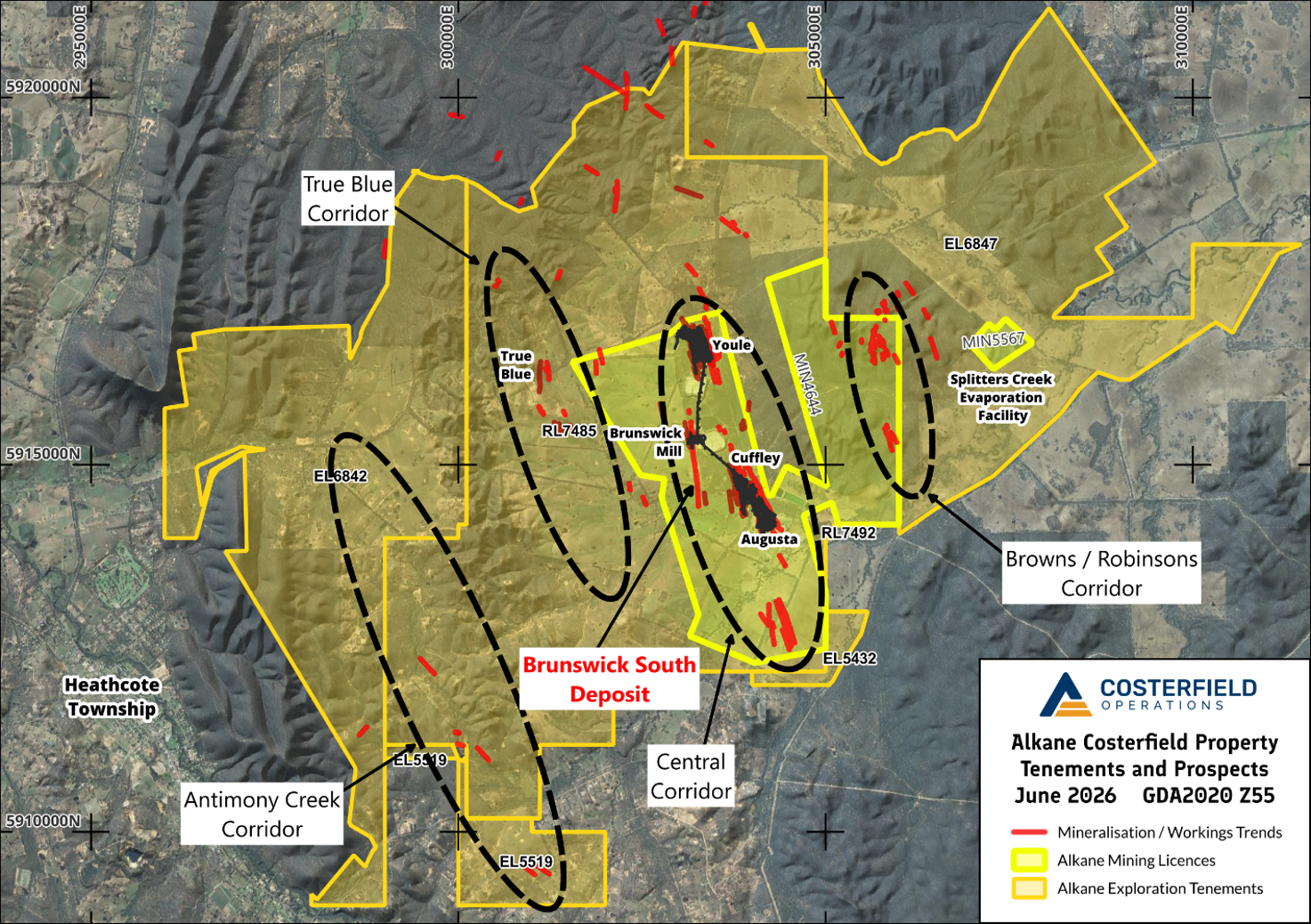
Figure 1. Regional map of the Costerfield Project in GDA2020 grid showing Alkane tenements and the main corridors of mineralisation identified, highlighting the location of the Brunswick South deposit.
A small, near-surface resource delineated by AGD at the time of open-cut mining exists approximately 400m south of the main deposit, which indicated strong structural continuity for the Brunswick deposit outside of the mined area. This Brunswick South deposit remained resistant to significant extension via diamond drilling down-dip, until mid-2025 when a campaign of three diamond holes all intersected high-grade mineralisation over the span of 175m just below the level of the Cuffley-Brunswick access, prompting immediate intensive infill and extension drilling (ASX announcement 15 October 2025 titled ‘Costerfield Resource and Reserve Statement’). The previous high grade intercepts included:
- 76.6 g/t gold over 0.49m (ETW 0.44m) in BD387;
- 265.0 g/t gold and 0.7% antimony over 0.29m (ETW 0.17m) in BD388; and
- 52.3 g/t gold over 1.69m (ETW 1.58m) in BD391
Deposit Geology
The Brunswick Deposit is located at the apex of the Costerfield Dome, between the Augusta and Youle deposits at Costerfield and offset approximately 500m west of the main corridor of mineralisation. The Costerfield Formation host rocks are uniformly siltstones above approximately 900RL (300m below surface), transitioning to thin bedded and fine-grained turbidites below this level. The mineralisation in the north is hosted by a vertical shear that occupies the hinge of the gentle Brunswick Anticline, crossing to an adjacent parasitic syncline in the new southern portion of the deposit. Mineralisation in the vertical, shear hosted part of the deposit tends to be antimony-rich and proportionally deficient in quartz compared to most other worked Costerfield veins, while retaining gold grades comparable to the rest of the field.
North-west trending, steeply dipping faults intersect the Brunswick shear and delineate high-grade shoots within the orebody. This relationship is well understood in the northern part of the deposit where open-cut mining took place and is expected to be important in the south. Bedding-parallel laminated quartz veins and faults are common and influence ore grades at a local scale, the lode structure typically crosses these structures without significant offset or deviation until the Kiwi Fault is reached. The Kiwi Fault is a bedding parallel, laminated quartz fault where seen on the western limb of the Brunswick Anticline, which increases in late, brittle damage and bifurcates into a duplex stack (with the Rooster Fault as its footwall) as it flattens out over the crest of the anticline. In the northern end of the Brunswick deposit where the Brunswick shear intersects the Kiwi Fault where it is almost horizontal, mineralisation splits into several parallel, vertical veins bound between the Kiwi and Rooster fault planes that can achieve high grades albeit with limited ore panel heights. In the new southern area where the Brunswick Shear intersects the fault in a position where it dips moderately westward, mineralisation appears to roll into the fault plane and continue down-dip in a fashion analogous to the Kendal vein system and high-grade Youle Lode in the northern end of the Costerfield Main Corridor. The mineralisation so far encountered proximal to and within the Kiwi Zone differs significantly to the antimony-rich shear seen above, being predominantly free from stibnite and rich in quartz. The gold-rich quartz veining is multiple-generation, containing early brecciated quartz healed by a later quartz matrix.
Below the Rooster Fault, low-tenor mineralisation in the northern part of the deposit continues down dip in a vertical shear of similar character to that above, offset approximately 80m to the west. This area to the south has not been drill tested to date, and the mineralised Kiwi Fault plane is still being explored to determine the extent of mineralisation.
Drilling Results
Since the previous release, 91 extension and infill holes have been completed, totalling 28,421m of diamond drill core. In addition to extending the new high-grade zone, further infill of the existing historic resource was conducted to identify possible economic continuity between the two areas, which appears to be the case. Of the drilled holes, 10 intercepts have resulted in assays grading above 10g/t AuEq1 over a diluted mining width of 1.8m:
- BD468 - 50.1g/t Au & 26.2% Sb over 2.17m (ETW 1.08m) (Figure 6)
- BD433 - 109.9g/t Au & 3.1% Sb over 0.65m (ETW 0.62m)
- BD424 - 50.2g/t Au & 33.3% Sb over 0.86m (ETW 0.62m)
- BD408 - 39.8g/t Au & 0.7% Sb over 1.30m (ETW 1.15m)
- BD513 - 25g/t Au & 0% Sb over 1.70m (ETW 1.64m) (Figure 7)
- BD496 - 21.6g/t Au & 6.7% Sb over 1.65m (ETW 0.92m)
- BD435 - 50.3g/t Au & 27.3% Sb over 0.55m (ETW 0.32m)
- BD445 - 34.2g/t Au & 0% Sb over 0.74m (ETW 0.69m)
- BD430 - 32.3g/t Au & 0% Sb over 0.93m (ETW 0.71m)
- BD423 - 11.4g/t Au & 7.1% Sb over 1.54m (ETW 0.96m)
The drilling in hand has identified two main economic zones:
- An upper shoot of high-grade antimony-gold mineralisation at the central-southern end of the deposit, reaching from BD468 approximately 80m from surface down to BD496 at around 280m below surface (~200m panel height), and;
- A lower panel of gold-dominated mineralisation with a strike length approaching 400m, located below the Penguin Fault, down to and including the Kiwi Fault (“Kiwi Zone” in this release)
Additional ore-grade intercepts were made centrally within the existing near-surface resource, building confidence in the economic extents of the deposit as a whole. A general trend observed amongst the economic-grade intercepts was the transition from antimony-rich intercepts in the upper level of the deposit to gold dominated with lesser antimony approaching and within the Kiwi Zone. This trend is also observed in the Youle/Shepherd system at a deeper level, which suggests that the zonation may occur on a per-deposit basis rather than a field-wide gradient.
Many intercepts of smaller-scale splay veins associated with the Brunswick South structure were found, the most notable of which was in BD463W2 with 288g/t Au over 0.16m (ETW 0.14m) located approximately 10m west of the main Brunswick South structure. These splays are likely to be systematically followed up with additional holes from underground drilling platforms when mining reaches Brunswick South.
In addition to intercepts made on the main system a previously unknown line of mineralisation was identified near surface, approximately 200 metres west of, and striking parallel to, the Brunswick deposit. This Brunswick West target appears to dip 60-70 degrees east and is projected to intercept the Kiwi Zone down-dip of where currently tested. While mineralisation is sporadic on the structure (small-scale structural complexity and low drilling angles are contributing factors), an intercept of 8.4g/t gold and 1.3% antimony over 0.32m (ETW 0.31m) was drilled in BD475 and is the deepest traverse of the line at ~220m below surface.
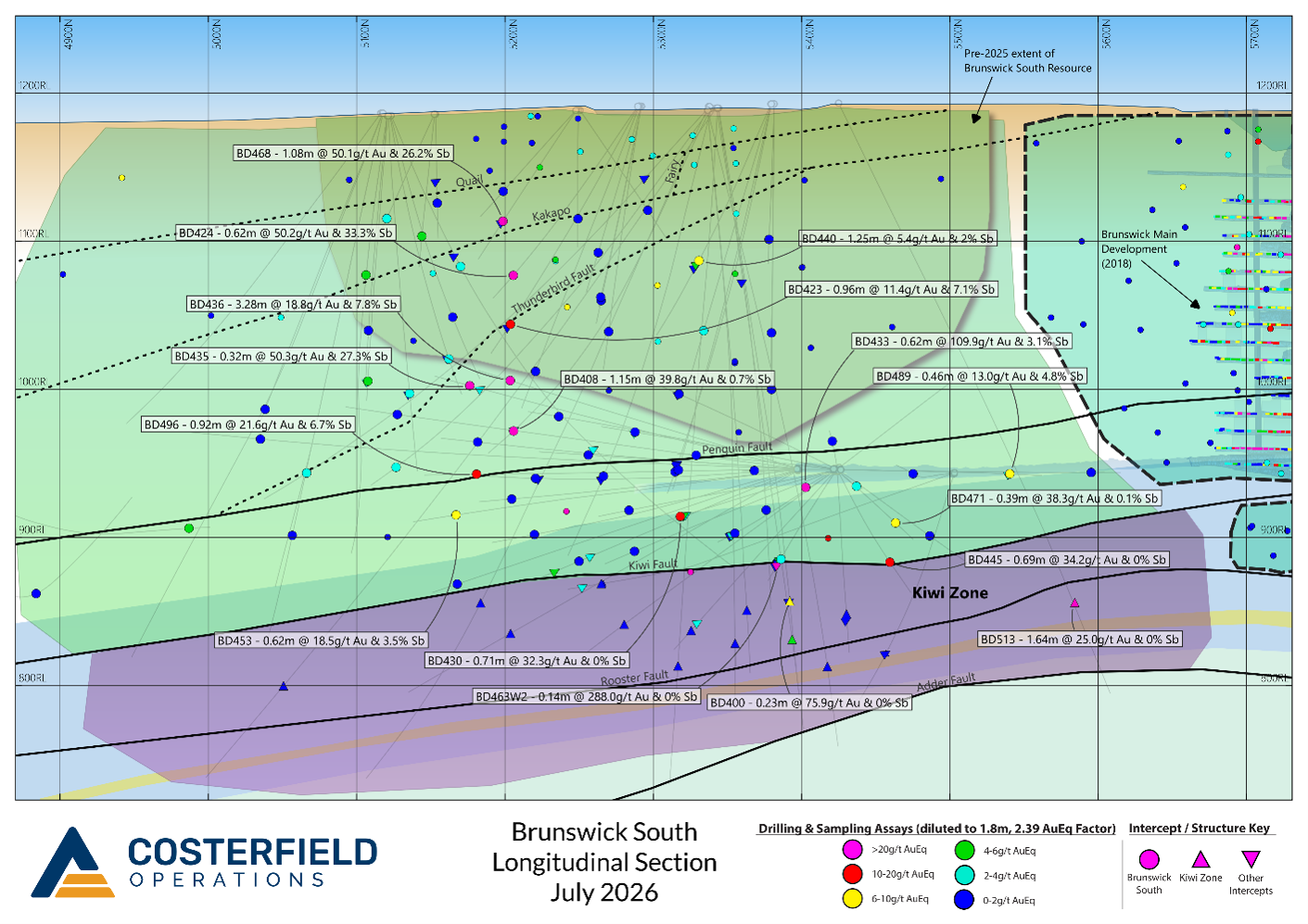
Figure 2. Long Section of the Brunswick South deposit with major vein target envelopes displayed, recent drill traces and > 6g/t AuEq new intercepts labelled. Older significant drill intercepts are displayed as smaller, unlabelled icons.
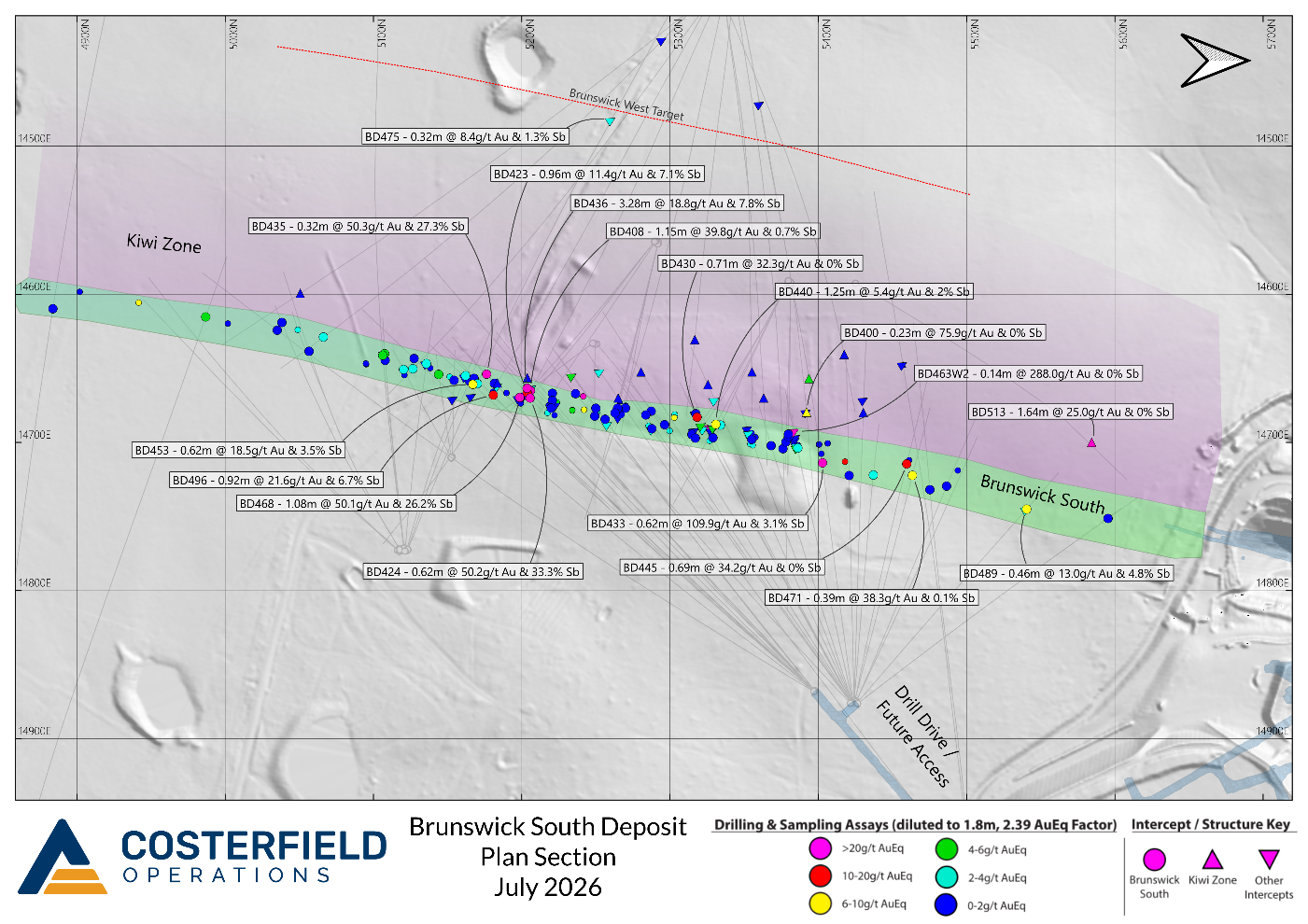
Figure 3. Brunswick South Deposit Plan Section with recent drill traces and > 6g/t AuEq new intercepts labelled. Older significant drill intercepts are displayed as smaller, unlabelled icons.
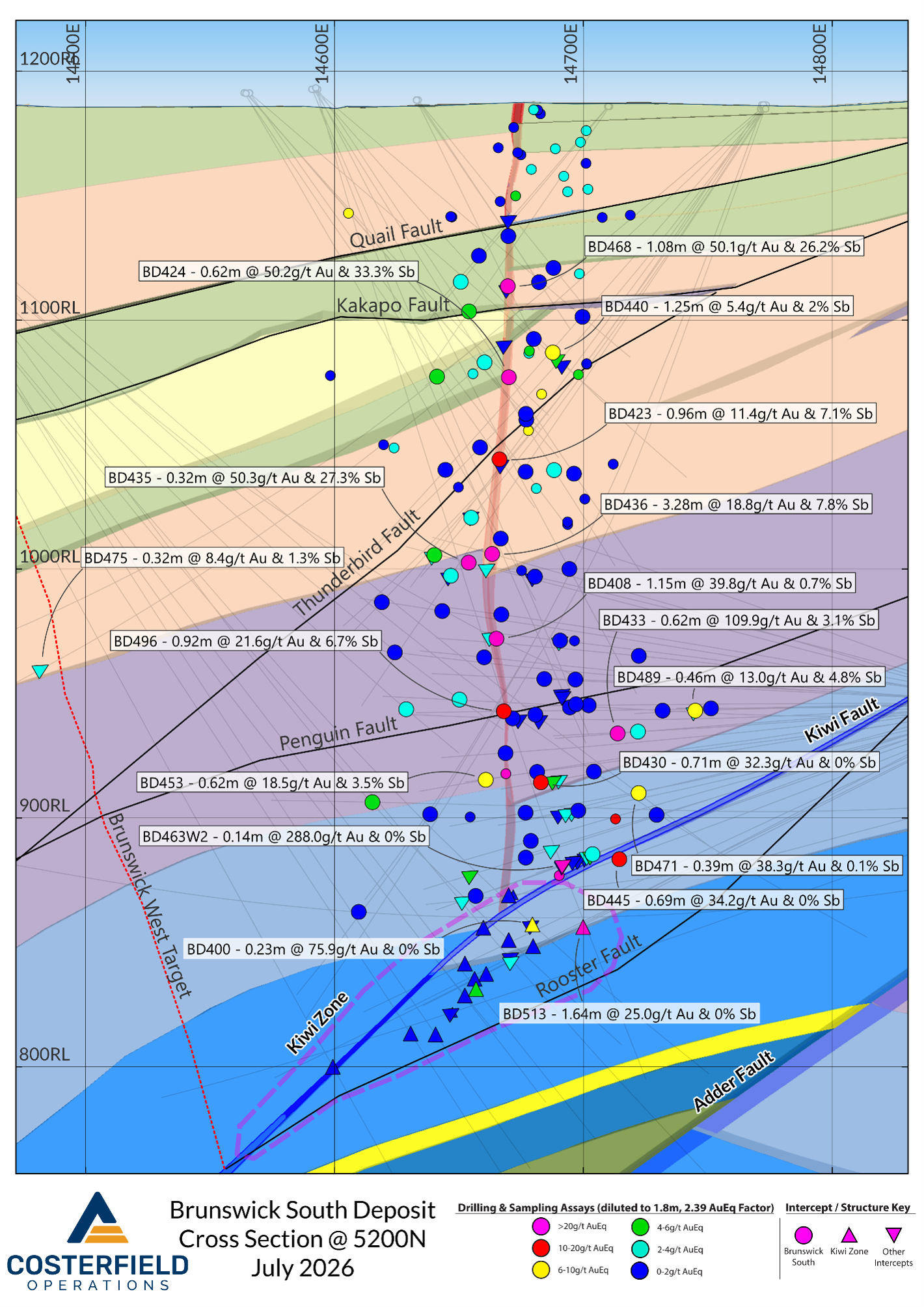
Figure 4. Cross section of the Brunswick South deposit with the Costerfield Leapfrog geology model sliced at 5200N, where the greatest number of new high-grade intercepts are located. The spread of intercepts away from the model slice is due to the strike of the Brunswick South deposit being approximately 15 degrees east of mine grid north (as seen in Figure 3).
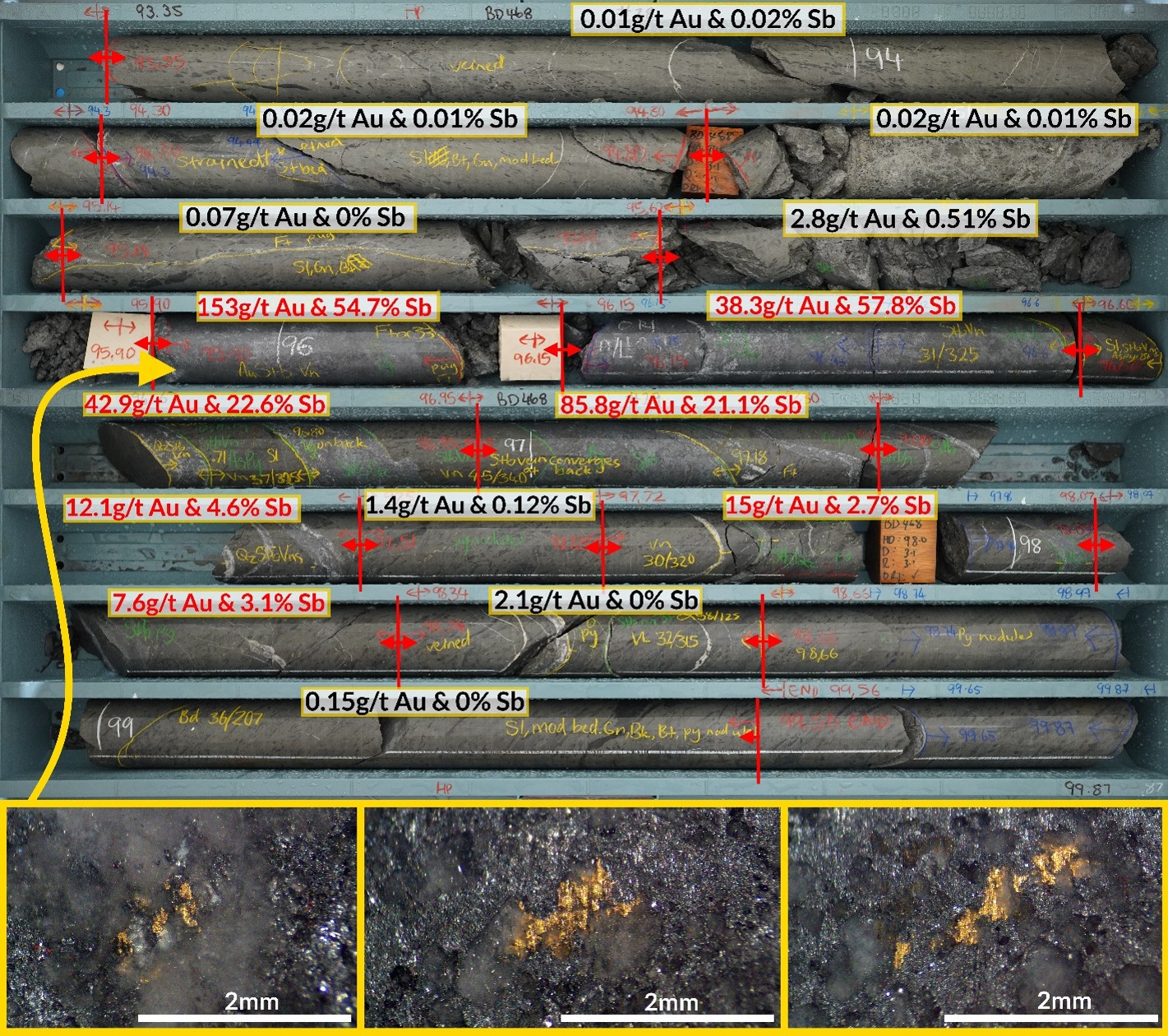
Figure 5. Core tray photograph of the Brunswick South intercept of BD468 (50.1g/t gold and 26.2% antimony over 2.17m - ETW 1.08m) exhibiting the shear-associated, stibnite rich character typical to the Brunswick deposit above the Kiwi Zone. Zonation of sulphide wallrock alteration, from fine grained arsenopyrite proximal to the high grade veins to more distal blebby aggregates of pyrite may also be discerned. Photomicrographs of gold clusters within quartz and stibnite from the richest segment of the intercept are also shown.
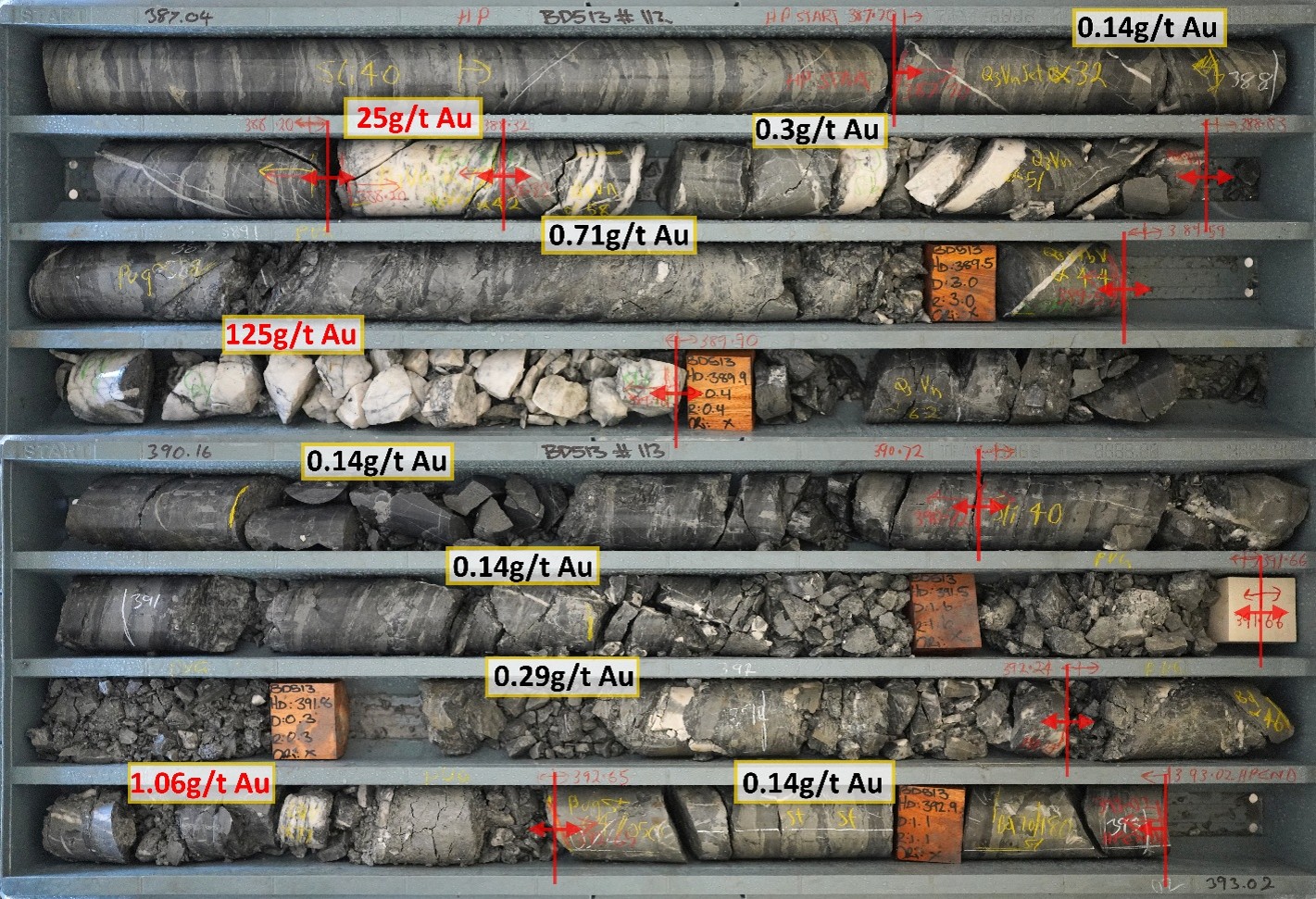
Figure 6. Tray photograph and gold grades of the Kiwi Zone in drillhole BD513. The mineralisation is quartz-dominated in contrast to the upper Brunswick South structure, and occurs at a low angle to the west-dipping bedding, following the Kiwi Fault plane. This is dissimilar to K-R mineralisation beneath Brunswick Main where vertical veins are bound between the hangingwall and footwall planes of the fault slice due to the flattening of the Kiwi and Rooster Fault structures, being more aligned with a Youle-like geometry.
Future Plans
The information presented in this release has been integrated into the Costerfield mine schedule, and the commencement of capital development to access the area is scheduled for Q3 2026. Several targets have emerged as priority for further testing, which include:
- Further down-dip on the Kiwi Fault structure, which has not been effectively tested below 800RL to date. Applying the Youle thrust-hosted model to the structure, changes in dip and strike may host further economic pods of mineralisation, and Shepherd-like vertical veins suspected in the footwall are also being tested for.
- The gap in close-spaced drilling between the Brunswick and Brunswick South deposits will be tested in the near future, as the presence of grade pods here will likely influence the positioning of capital development.
- Southern extension or repetition of grade pods. BD407, the southernmost testing hole of this program stepped out 100 metres south of the previous bounding hole and intersected the Brunswick shear at 4884N. This intercept returned 9.4g/t gold over 0.30m (ETW 0.30m), demonstrating that the system has strong structural continuity and may form further shoots of economic mineralisation in this direction.
- A previously unknown mineralised structure was intercepted near surface from western drilling platforms. The best result to date from this structure is 8.4g/t gold and 1.3% antimony over 0.32m (ETW 0.31m) in BD475. Structural and grade continuity where tested to date is somewhat weak, although interpretation shows the vein to have an easterly dip, leading to an intersection axis close to the Brunswick South to Kiwi Zone transition. The highest prospectivity on this structure is likely towards the south, which will be further tested later in the year when private land access is favourable.
An updated Brunswick South resource will be announced as part of Alkane’s upcoming Resource and Reserves Statement.
This document has been authorised for release to the market by Nic Earner, Managing Director & CEO.
ABOUT ALKANE ‐ www.alkres.com ‐ ASX:ALK | TSX: ALK | OTCQX: ALKRY
Alkane (ASX:ALK; TSX:ALK; OTCQX:ALKRY) is an Australia-based gold and antimony producer with a portfolio of three operating mines across Australia and Sweden. The Company has a strong balance sheet and is positioned for further growth.
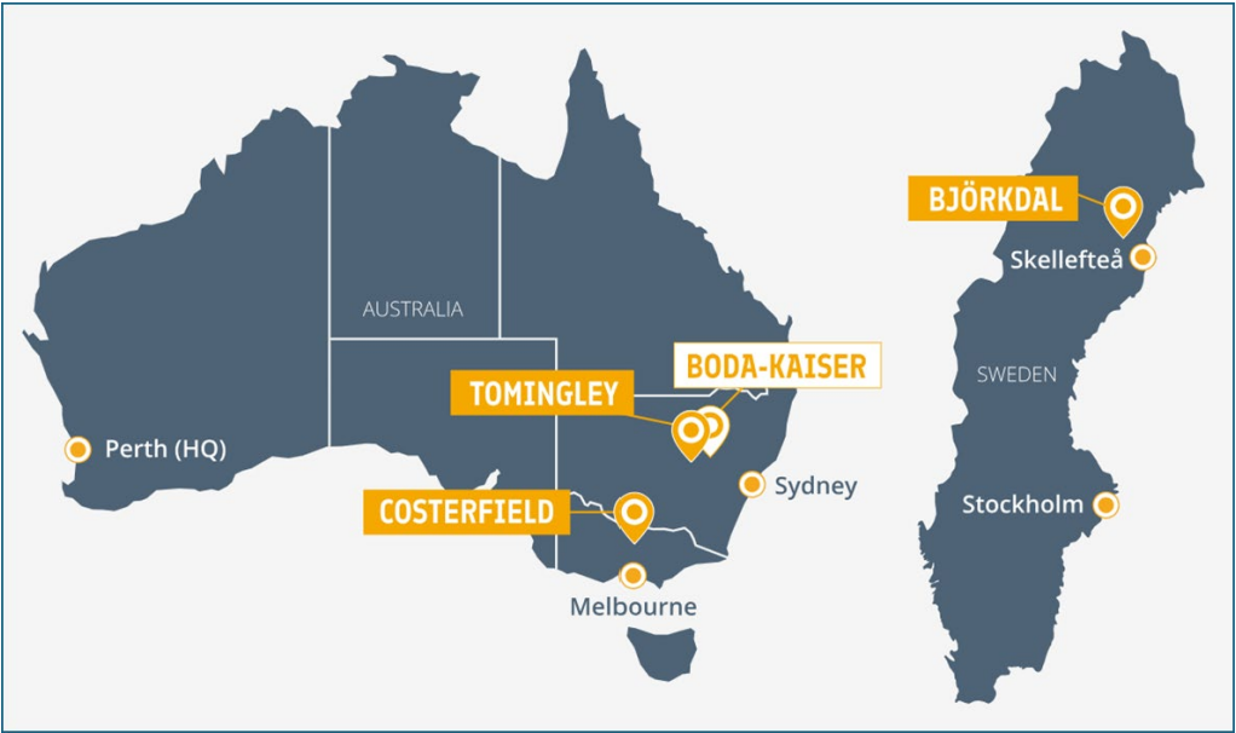
Alkane’s wholly owned producing assets are the Tomingley open pit and underground gold mine southwest of Dubbo in Central West New South Wales, the Costerfield gold and antimony underground mining operation northeast of Heathcote in Central Victoria, and the Björkdal underground gold mine northwest of Skellefteå in Sweden (approximately 750 km north of Stockholm). Ongoing near-mine regional exploration continues to grow resources at all three operations.
Alkane also owns the very large gold-copper porphyry Boda-Kaiser Project in Central West New South Wales and has outlined an economic development pathway in a Scoping Study. The Company has ongoing exploration within the surrounding Northern Molong Porphyry Project and is confident of further enhancing eastern Australia’s reputation as a significant gold, copper and antimony production region.
Competent Persons Statement
Certain information in this announcement relating to Exploration Results has been previously released to the ASX. Alkane confirms that it is not aware of any new information or data that materially affects the information included in those market announcements and that all material assumptions and technical parameters underpinning the estimates and Exploration Results in those announcements continue to apply and have not materially changed.
The information in this report that relates to the Costerfield Exploration Results is based on, and fairly represents, information compiled and verified by Mr Chris Davis. Mr Davis is a Chartered Professional (Geology) of the Australasian Institute of Mining and Metallurgy (MAusIMM CP(Geo)), and a Member of the Australian Institute of Geoscientists (MAIG).
Mr Davis has sufficient experience that is relevant to the style of mineralisation and type of deposit under consideration and to the activity being undertaken to qualify as a Competent Person as defined in the 2012 Edition of the “Australian Code for Reporting of Exploration Results, Mineral Resources, and Ore Reserves” (JORC Code).
For the purposes of National Instrument 43-101 – Standards of Disclosure for Mineral Projects (‘NI 43-101’), the scientific and technical information contained in this announcement relating to the Costerfield Exploration Results has been prepared under the supervision of, and approved by, Mr Chris Davis, who is a “qualified person” as defined in NI 43-101. Mr Davis is employed by Alkane as Chief Geologist and, as an employee of Alkane, is not considered independent of Alkane within the meaning of NI 43-101.
Mr Davis consents to the inclusion in this report of the matters based on his information in the form and context in which they appear.
Cautionary Note Regarding Forward-Looking Information and Statements
This announcement contains certain forward-looking information and forward-looking statements within the meaning of applicable securities legislation and may include future-oriented financial information or financial outlook information (collectively Forward-Looking Information). Actual results and outcomes may vary materially from the amounts set out in any Forward-Looking Information. As well, Forward-Looking Information may relate to: future outlook and anticipated events; expectations regarding exploration potential; production capabilities and future financial or operating performance, including AISC, investment returns, margins and share price performance; production and cost guidance and the timing thereof; issuing updated resources and reserves estimate and the timing thereof; the potential of Alkane to meet industry targets, public profile and expectations; and future plans, projections, objectives, estimates and forecasts and the timing related thereto.
Forward-Looking Information is generally identified by the use of words like "will", "create", "enhance", "improve", "potential", "expect", "upside", "growth" and similar expressions and phrases or statements that certain actions, events or results "may", "could", or "should", or the negative connotation of such terms, are intended to identify Forward-Looking Information.
Although Alkane believes that the expectations reflected in the Forward-Looking Information are reasonable, undue reliance should not be placed on Forward-Looking Information since no assurance can be provided that such expectations will prove to be correct. Forward-Looking Information is based on information available at the time those statements are made and/or good faith belief of the officers and directors of Alkane as of that time with respect to future events and are subject to risks and uncertainties that could cause actual results to differ materially from those expressed in or suggested by the Forward-Looking Information. Forward-Looking Information involves numerous risks and uncertainties. Such factors include, without limitation: risks relating to changes in the gold and antimony price.
Forward-Looking Information is designed to help readers understand Alkane’s views as of that time with respect to future events and speak only as of the date they are made. Except as required by applicable law, Alkane assumes no obligation to update or to publicly announce the results of any change to any forward-looking statement contained or incorporated by reference herein to reflect actual results, future events or developments, changes in assumptions or changes in other factors affecting the Forward-looking Information. If Alkane updates any one or more forward-looking statements, no inference should be drawn that the company will make additional updates with respect to those or other Forward-looking Information. All Forward-Looking Information contained in this announcement is expressly qualified in its entirety by this cautionary statement.
Disclaimer
Alkane has prepared this announcement based on information available to it. No representation or warranty, express or implied, is made as to the fairness, accuracy, completeness or correctness of the information, opinions or conclusions contained in this announcement. To the maximum extent permitted by law, none of Alkane, its directors, officers, employees, associates, advisers and agents, nor any other person accepts any liability, including, without limitation, any liability arising from fault or negligence on the part of any of them or any other person, for any loss arising from the use of this announcement or its contents or otherwise arising in connection with it.
This announcement is not an offer, invitation, solicitation, or other recommendation with respect to the subscription for, purchase or sale of any security, and neither this announcement nor anything in it shall form the basis of any contract or commitment whatsoever.
APPENDIX 1 – Tabulated Drilling Results
Significant intercepts from the Brunswick South infill and growth drilling programs at Costerfield
Notes
1. The AuEq (gold equivalent) grade is calculated using the following formula:
AuEq =Au (g/t) + 2.39 x Sb (%)AuEq g per t=Au g per t+Sb%×
And the AuEq factor of 2.39 is calculated:
- at a gold price of US$2,500/oz
- an antimony price of US$19,000/t
- with 2025 predicted metal recoveries of 91% Au and 92% Sb.
Prices and recoveries used: Au $/oz = 2,500; Sb $/t = 19,000; Au Recovery = 91% and; Sb Recovery = 92%
2. Composites that are not interpreted to be connected to a major vein and are below 1 g/t AuEq when diluted to 1.8m are not considered significant and are not recorded here.
Drill hole collar details from the Brunswick South drilling program at Costerfield:
Notes:
- Coordinate System: Costerfield Local Mine Grid
Appendix 2 - JORC Code, 2012 Edition – Table 1
Section 1 Sampling Techniques and Data
- Nature and quality of sampling (e.g. cut channels, random chips, or specific specialised industry standard measurement tools appropriate to the minerals under investigation, such as down hole gamma sondes, or handheld XRF instruments, etc.). These examples should not be taken as limiting the broad meaning of sampling.
- Include reference to measures taken to ensure sample representivity and the appropriate calibration of any measurement tools or systems used.
- Aspects of the determination of mineralisation that are Material to the Public Report.
- In cases where ‘industry standard’ work has been done this would be relatively simple (e.g. ‘reverse circulation drilling was used to obtain 1 m samples from which 3 kg was pulverised to produce a 30 g charge for fire assay’). In other cases more explanation may be required, such as where there is coarse gold that has inherent sampling problems. Unusual commodities or mineralisation types (e.g. submarine nodules) may warrant disclosure of detailed information.
- All stibnite-bearing veins are sampled.
- Intersections of polyphase breccias, stockwork veins, laminated quartz veins or massive quartz veins were routinely sampled.
- A waste sample is taken either side of the mineralized vein (30–100 cm).
- Siltstone is sampled where disseminated arsenopyrite is prevalent.
- Fault gouge zones were sampled at the discretion of the geologist.
- Gold grades were determined by either fire assay (25 g charge) with an AAS finish, screen fire assay or Chrysos photon assay technology.
- Antimony concentrations were determined using an aqua regia based acid digest with an AAS finish.
- Drill type (e.g. core, reverse circulation, open-hole hammer, rotary air blast, auger, Bangka, sonic, etc) and details (e.g. core diameter, triple or standard tube, depth of diamond tails, face-sampling bit or other type, whether core is oriented and if so, by what method, etc.).
- Method of recording and assessing core and chip sample recoveries and results assessed.
- Measures taken to maximise sample recovery and ensure representative nature of the samples.
- Whether a relationship exists between sample recovery and grade and whether sample bias may have occurred due to preferential loss/gain of fine/coarse material.
- Whether core and chip samples have been geologically and geotechnically logged to a level of detail to support appropriate Mineral Resource estimation, mining studies and metallurgical studies.
- Whether logging is qualitative or quantitative in nature. Core (or costean, channel, etc.) photography.
- The total length and percentage of the relevant intersections logged.
- If core, whether cut or sawn and whether quarter, half or all core taken.
- If non-core, whether riffled, tube sampled, rotary split, etc., and whether sampled wet or dry.
- For all sample types, the nature, quality and appropriateness of the sample preparation technique.
- Quality control procedures adopted for all sub-sampling stages to maximise representivity of samples.
- Measures taken to ensure that the sampling is representative of the in situ material collected, including for instance results for field duplicate/second-half sampling.
- Whether sample sizes are appropriate to the grain size of the material being sampled.
- Sample information and characteristics were measured, logged, recorded in the acQuire database and assigned a unique sample ID.
- Sample material was placed into a calico bag previously marked with the unique sample ID.
- Calico bags were loaded into plastic bags such that the plastic bags weighed less than 10 kg.
- An assay submission sheet was generated and placed into the plastic bag.
- Plastic bags containing samples were sealed with a metal or plastic tie and transported to On Site in Bendigo via private courier or Alkane staff.
- Samples were received and checked for labelling, missing samples, etc. against the submission sheet.
- If the sample batch matched the submission sheet, sample metadata were entered into On Site’s LIMS. In the event that discrepancies were noted, Mandalay Resources was contacted by On Site to resolve the discrepancy prior to further work commencing. Records of all discrepancies and corrective actions taken are recorded by the Mandalay Resources database administrator.
- A job number was assigned, and worksheets and sample bags were prepared.
- Samples were placed in an oven and dried overnight at 106°C.
- Samples were weighed and recorded.
- The entire dried sample was crushed using a Rocklabs Smart BOYD Crusher RSD Combo with a jaw closed side setting of 2 mm.
- If the dried sample weight was less than 3 kg, the entire sample was retained for pulverisation. If the dried sample weight was greater than 3 kg, the sample was spilt to 3 kg using the rotary splitter that is incorporated in the BOYD crusher.
- Rejects from splits greater than 3 kg were retained as coarse rejects in labelled calico bags and returned to Mandalay Resources.
- The 3 kg sample was then pulverised in an Essa LM5 Pulverising Mill to 90% passing 75 µm.
- The 3 kg pulverised samples were then subsampled to take a master ~200 g pulp split for assay by a manual scooping procedure across the full width and depth of the mill bowl and loaded sequentially into labelled pulp packets.
- The ~3 kg pulverised samples were then subsampled to fill a ~280 g photon assay jar by a manual scooping procedure across the full width and depth of the mill bowl.
- For every 21 primary samples, a sample was randomly selected by LIMS and a duplicate 200 g split for fire assay or second jar for photon assay was submitted for analysis using the same analytical procedure as the primary sample.
- The remaining pulp was returned to its sample bag and then returned to Mandalay Resources for retention following the completion of assay.
- The nature, quality and appropriateness of the assaying and laboratory procedures used and whether the technique is considered partial or total.
- For geophysical tools, spectrometers, handheld XRF instruments, etc., the parameters used in determining the analysis including instrument make and model, reading times, calibrations factors applied and their derivation, etc.
- Nature of quality control procedures adopted (e.g. standards, blanks, duplicates, external laboratory checks) and whether acceptable levels of accuracy (i.e. lack of bias) and precision have been established.
- Gold grades were determined either by a 25g charge with lead flux fire assay and an AAS finish, or by Chrysos photon assay technology.
- Antimony, iron and arsenic concentrations were determined using an aqua regia based acid digest with an AAS finish.
- The verification of significant intersections by either independent or alternative company personnel.
- The use of twinned holes.
- Documentation of primary data, data entry procedures, data verification, data storage (physical and electronic) protocols.
- Discuss any adjustment to assay data.
- Accuracy and quality of surveys used to locate drill holes (collar and downhole surveys), trenches, mine workings and other locations used in Mineral Resource estimation.
- Specification of the grid system used.
- Quality and adequacy of topographic control.
- Data spacing for reporting of Exploration Results.
- Whether the data spacing and distribution is sufficient to establish the degree of geological and grade continuity appropriate for the Mineral Resource and Ore Reserve estimation procedure(s) and classifications applied.
- Whether sample compositing has been applied.
- Whether the orientation of sampling achieves unbiased sampling of possible structures and the extent to which this is known, considering the deposit type.
- If the relationship between the drilling orientation and the orientation of key mineralised structures is considered to have introduced a sampling bias, this should be assessed and reported if material.
- The measures taken to ensure sample security.
- The results of any audits or reviews of sampling techniques and data.
Section 2 Reporting of Exploration Results
Criteria listed in the Section 1 also apply to this section.
- Type, reference name/number, location and ownership including agreements or material issues with third parties such as joint ventures, partnerships, overriding royalties, native title interests, historical sites, wilderness or national park and environmental settings.
- The security of the tenure held at the time of reporting along with any known impediments to obtaining a licence to operate in the area.
- Acknowledgment and appraisal of exploration by other parties.
- Deposit type, geological setting and style of mineralisation.
- A summary of all information material to the understanding of the exploration results including a tabulation of the following information for all Material drill holes:
- easting and northing of the drill hole collar
- elevation or RL (Reduced Level – elevation above sea level in metres) of the drill hole collar
- dip and azimuth of the hole
- downhole length and interception depth
- hole length.
- If the exclusion of this information is justified on the basis that the information is not Material and this exclusion does not detract from the understanding of the report, the Competent Person should clearly explain why this is the case.
- In reporting Exploration Results, weighting averaging techniques, maximum and/or minimum grade truncations (e.g. cutting of high grades) and cut-off grades are usually Material and should be stated.
- Where aggregate intercepts incorporate short lengths of high grade results and longer lengths of low grade results, the procedure used for such aggregation should be stated and some typical examples of such aggregations should be shown in detail.
- The assumptions used for any reporting of metal equivalent values should be clearly stated.
- at a gold price of US$2,500/oz
- an antimony price of US$19,000/t
- with 2025 predicted metal recoveries of 91% Au and 92% Sb.
- These relationships are particularly important in the reporting of Exploration Results.
- If the geometry of the mineralisation with respect to the drill hole angle is known, its nature should be reported.
- If it is not known and only the down hole lengths are reported, there should be a clear statement to this effect (e.g. ‘downhole length, true width not known’).
- Appropriate maps and sections (with scales) and tabulations of intercepts should be included for any significant discovery being reported These should include, but not be limited to a plan view of drill hole collar locations and appropriate sectional views.
- Where comprehensive reporting of all Exploration Results is not practicable, representative reporting of both low and high grades and/or widths should be practiced to avoid misleading reporting of Exploration Results.
- Other exploration data, if meaningful and material, should be reported including (but not limited to): geological observations; geophysical survey results; geochemical survey results; bulk samples – size and method of treatment; metallurgical test results; bulk density, groundwater, geotechnical and rock characteristics; potential deleterious or contaminating substances.
- If (Sb%>1) BD=((1.3951 × Sb%)+(100-(1.3951 × Sb%)))/(((1.3951 × Sb%)/4.56)+((100-(1.3951 × Sb%))/2.69) )
- If (Sb%<1) BD= (0.05661 × Fe%) + 2.5259
- where:
- Empirical formula of stibnite: Sb2S3.
- Sb%: Antimony assay as a percentage by mass.
- Molecular weight of antimony (Sb): 121.757.
- Molecular weight of sulfur: (S): 32.066.
- 1.3951 is a constant calculated by 339.712/243.514 where 339.712 is the molar mass of Sb2S3, and 243.514 is the molar mass of antimony contained in one mole of pure stibnite.
- BD of pure stibnite: 4.56.
- BD of unmineralised gangue: 2.69, representing a ratio of 1:3 siltstone to quartz.
- Fe%: Iron assay as a percentage by mass.
- The nature and scale of planned further work (e.g. tests for lateral extensions or depth extensions or large-scale step-out drilling).
- Diagrams clearly highlighting the areas of possible extensions, including the main geological interpretations and future drilling areas, provided this information is not commercially sensitive.
CONTACT: NIC EARNER, MANAGING DIRECTOR & CEO, ALKANE RESOURCES LTD, TEL +61 8 9227 5677
INVESTORS & MEDIA: NATALIE CHAPMAN, CORPORATE COMMUNICATIONS MANAGER, TEL +61 418 642 556
1 AuEq calculated with assumptions: Au $/oz = 2,500; Sb $/t = 19,000; Au Recovery = 91% and; Sb Recovery = 92%
Images accompanying this announcement are available at
https://www.globenewswire.com/NewsRoom/AttachmentNg/4030311a-d085-4f12-a148-a00ec4988cf3
ttps://www.globenewswire.com/NewsRoom/AttachmentNg/29e0fe25-af80-435d-9b02-3fe5ece99653
https://www.globenewswire.com/NewsRoom/AttachmentNg/bd83ff0e-a124-41a3-b7c3-7cbe7622b858
https://www.globenewswire.com/NewsRoom/AttachmentNg/2f264de8-5362-4cb6-993a-29f9e7aded2a
https://www.globenewswire.com/NewsRoom/AttachmentNg/3a9c5474-ef7c-41ab-9c40-bc6d9950ffbc
https://www.globenewswire.com/NewsRoom/AttachmentNg/582a0669-5002-4ef6-b33d-3be1a3805f86
https://www.globenewswire.com/NewsRoom/AttachmentNg/b2998a8c-c918-4a90-bcfb-362280a0bdb7









 Aufrufe: 221
 Audio
Audio
 Teilen