"Beginning in March 2009, the Bank of England had purchased around £165 billion in assets as of September 2009 and around £175 billion in assets by the end of October 2009. At its meeting in November 2009, the Monetary Policy Committee (MPC) voted to increase total asset purchases to £200 billion. Most of the assets purchased have been UK government securities (gilts); the Bank has also purchased smaller quantities of high-quality private-sector assets. In December 2010, MPC member Adam Posen called for a £50 billion expansion of the Bank's quantitative easing programme, while his colleague Andrew Sentance has called for an increase in interest rates due to inflation being above the target rate of 2%. In October 2011, the Bank of England announced that it would undertake another round of QE, creating an additional £75 billion. In February 2012 it announced an additional £50 billion. In July 2012 it announced another £50 billion, bringing the total amount to £375 billion. The Bank has said that it will not buy more than 70% of any issue of government debt. This means that at least 30% of any issue of government debt will have to be purchased and held by institutions other than the Bank of England. In 2012 the Bank estimated that quantitative easing had benefited households differentially according to the assets they hold; richer households have more assets."
Quelle: en.wikipedia.org/wiki/Quantitative_easing
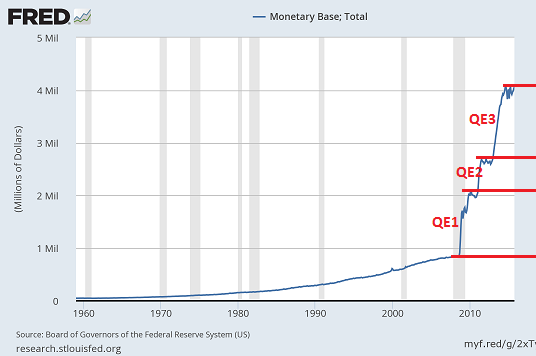
Man beachte die Staffelung der QEs! In den USA dauerte das Easing länger, und die Dimension von QE3 entsprach in etwa der von QE1 ("Gewaltakt"). Hieraus erklärt sich mE der Unterschied der Kursentwicklungen bei den nationalen Leitindizes. Die Bank of England hat ihr QE-Programm - im Gegensatz zu dem der Fed - nicht übertrieben, sondern "mit Augenmaß" betrieben.
Im Anhang der Chart des "Großen Sündenfalls", wie ich das Ganze im Verein mit ZIRP definiere:

 Zurück
Weiter
Zurück
Weiter